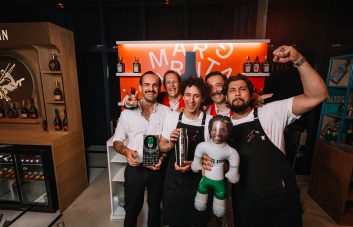
When you talk to Matthew Cordiner and Stephanie Macleod about Aberfeldy, you quickly realise they’re working on the same whisky from opposite ends of the process.
Cordiner, who grew up in Craigellachie in Speyside “surrounded by the whisky world,” came into the industry as a tour guide. What was meant to be a summer job became a career once he saw how many people travelled from all over the world to tiny Scottish villages just to understand Scotch. Being around retired distillery workers and warehousemen “made the passion grow,” he says. For him, history and heritage were the gateway into the role he has today. “I have the wonderful job of being the global brand ambassador,” he explains. “It’s a job where you wear many hats. I spend most of my time with the global malts team, sometimes behind the scenes with the creation of ideas for new launches and limited editions, and a lot of time with our archive team to make sure everything we say fits with the wonderful history we have.”
Macleod’s route into whisky was almost the opposite. A food scientist by training, she started out in soft drinks before her former university supervisor tempted her back into academia to work on whisky research. At that point, she admits, Scotch whisky “didn’t seem relevant” to her at all.
That changed fast. Working as a sensory analyst, she realised that from the same three basic ingredients you could create a whole universe of flavours. Two distilleries sitting side by side, she notes, can produce completely different spirits. And once you layer in the impact of oak, it becomes a lifelong puzzle. After several years in research, she decided she didn’t just want to study whisky, she wanted to make it, and joined Dewar’s in 1998.
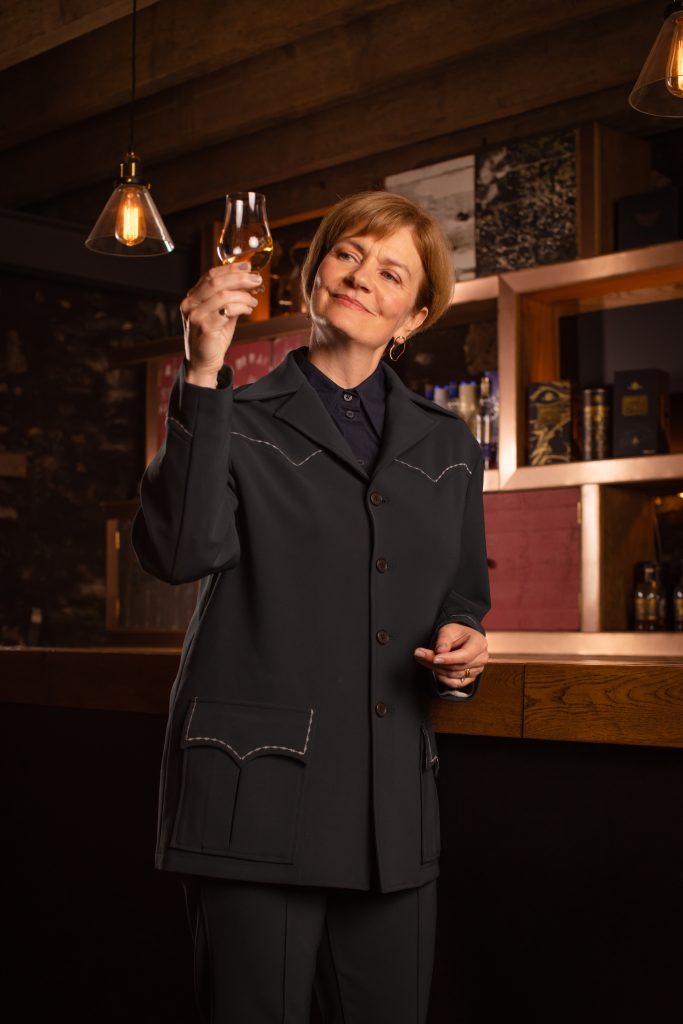
She began in quality control, looking after both dry goods and liquid, then set up Dewar’s first sensory panel so that flavour decisions no longer rested on a single nose. In 2003 she was asked if she’d like to train as Master Blender in view of her predecessor’s upcoming retirement. “I jumped at the chance,” she says. In 2006 she officially took over as Master Blender for Bacardi’s Scotch portfolio of blends and single malts, including Aberfeldy, and today also holds the title of Director of Blending, Scotch Whisky.
Handovers, Trust and “Behind the Curtain” Moments
On paper, one of them talks and one of them blends. In reality, the relationship between Macleod and Cordiner is a lot more intertwined. “It’s been a pleasure getting to know Stephanie over the years,” says Cordiner. “We spend a lot of time on the road together, talking with customers and whisky tasters. That’s a big part of our relationship: time on the road, and for me, getting a little ‘behind the curtains’ taste of what the team is working on back in Scotland.”
Within the global malts team, Cordiner and colleagues are often the ones sketching the broad outlines of limited editions – what sort of release might connect with drinkers, how many bottlings the brand could sustainably introduce, what kind of story they want to tell. But at a certain point, all of that gets handed over.
“We might have something we’re looking for in a limited edition,” he says, “but then it passes on to Stephanie and her amazing team. Within that rough parameter, they have the freedom to say: what do we have in the warehouses, what casks have we discovered recently, what are we working with?” He’s quick to underline how much trust sits in that handover. “I don’t think you get to be six-time winner of Best Master Blender in the World without knowing what you’re doing,” he says, referring to Macleod’s record-breaking run at the International Whisky Competition. “Within the global malt team we know they’re the experts. We have ideas about what would be great, but from that point on it’s over to Stephanie and her team to find the best possible casks.” For Macleod, that trust works both ways. The brand and advocacy teams keep her close to what people actually respond to, not just on social media, but in real-life tastings and bar conversations around the world. That feedback loop feeds neatly into the experiments in the warehouses back home.
Why Red Wine, and Why Now?
The Aberfeldy Red Wine Cask Series might look like a neat, fully formed idea, but Macleod describes it more as the result of years’ worth of patient trial and error. “When I took over in 2006, we decided to experiment with finishing casks,” she says. “We were probably a bit late to the game, other companies had been doing cask finishes for a while, but it was something we really hadn’t done before.” The team started with a broad palette: red wines, dessert wines, various fortified wines. The goal was partly exploratory: working out how often they should sample, how quickly a finishing cask could overpower the base whisky, and where the sweet spots were.
That period of quiet experimentation turned into a toolkit. As the single malts evolved and the brand teams grew more interested in showing different “facets” of each distillery, red wine casks emerged as a particularly powerful way to refract Aberfeldy’s house style. “We have a great supplier of casks, and every so often they send us a list,” she explains. “We’ll look at it and there’ll be something that jumps out. One year there was a Cadillac cask, and I was thinking about Aberfeldy and the U.S. and thought: Cadillac, the Bordeaux appellation, shares its name with the car brand Cadillac, I wonder if that would go down well in the States?” She laughs at the “idiot thoughts” and word associations that sometimes start the process, but they often end up making sense once wine and whisky come together in the glass. Her first checkpoint is always simple: a splash of the donor wine in a glass, swirl, discard, then pour in Aberfeldy.
“If at that stage they complement each other, that’s my first ‘maybe,’” she says. From there, the casks are purchased, nosed on arrival, filled with Aberfeldy and sampled monthly as the finish unfolds. “What we’re doing there is checking that the finishing process is going as we hoped, that the character of the distillery still shines through, no matter what the wine cask is.” This is how we end up with Aberfeldy expressions finished in Pomerol, Pauillac, Côte Rôtie, Napa Valley Cabernet and even a 21-year-old finished in casks from Argentinean winery Finca Ambrosia. What began as quiet lab work has become an annual rhythm of red wine releases.
House Rules: Let the Honey Speak
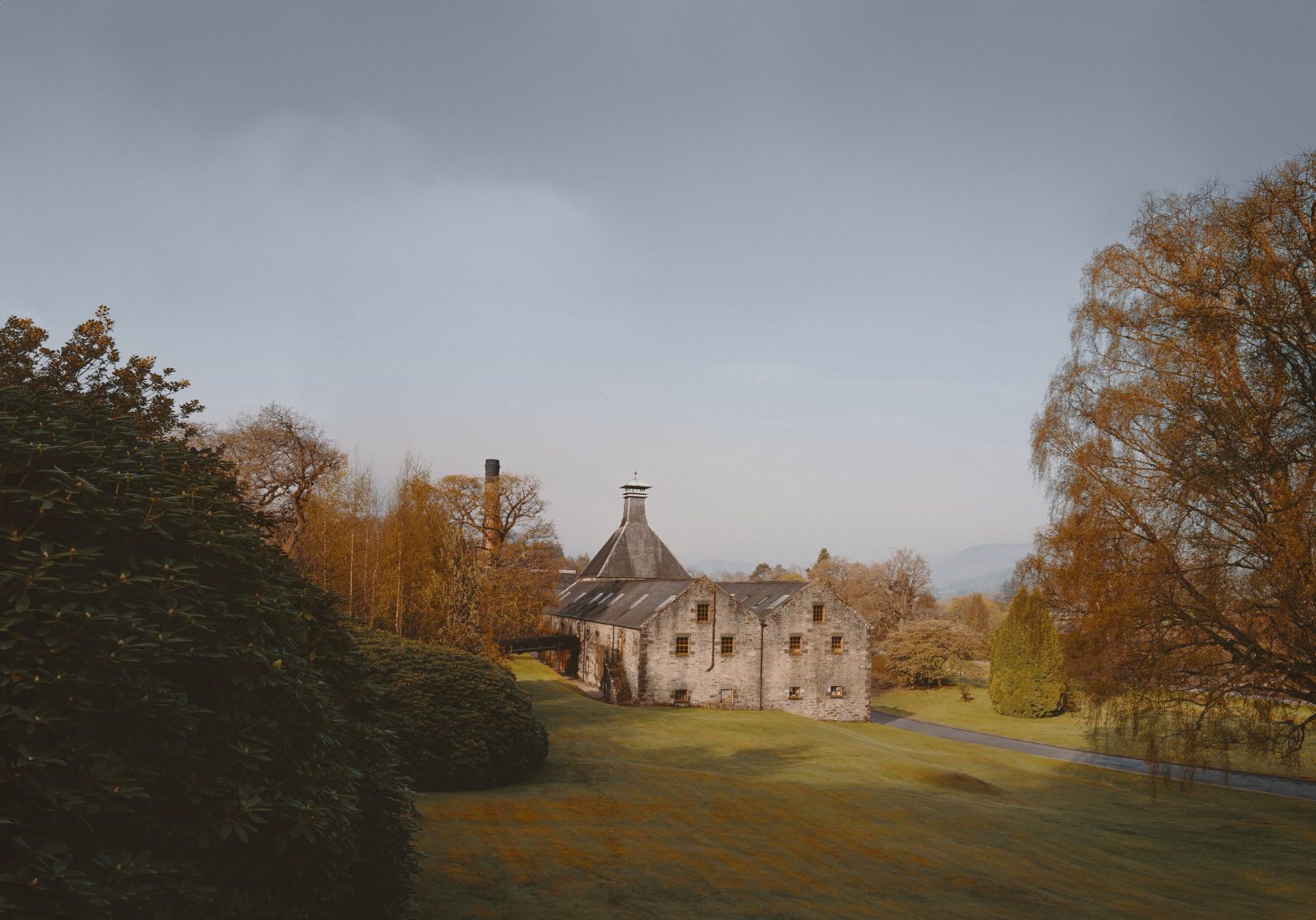
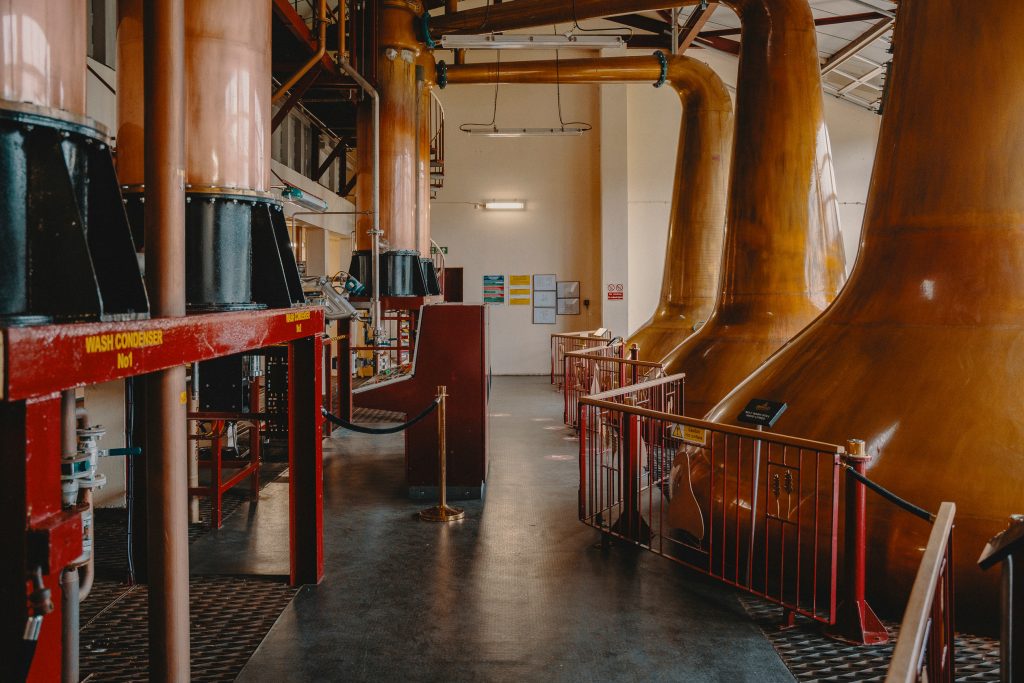
If there is a single red line running through all of this experimentation, it’s that the whisky has to remain recognisably Aberfeldy. “We always want whisky lovers to know they’re drinking, first of all, a Scotch whisky, and second of all, one of our distilleries,” says Macleod. “Aberfeldy is renowned for its honeyed sweetness, floral notes, grassy notes and that beautiful cereal, biscuity base. We always want that syrupy elegance to shine through whatever cask we’re using.” In practice, that means strict quality rules. Wine casks are assessed as they arrive. Any hint of off-notes and they’re rejected, no matter how glamorous the origin. “We’re usually finishing whisky that has already matured for a number of years,” she points out. “We wouldn’t want to waste all that time on substandard casks.”
The monthly sampling regime is another guardrail: just enough red wine character to add layers of fruit and spice, not so much that it drowns the Golden Dram in tannins and jam. The finishes tend to be measured in months rather than years, long enough to leave a clear fingerprint, short enough that you still get Aberfeldy in your glass. This philosophy stretches across the entire Dewar’s single malt portfolio, but Aberfeldy is where you see it most publicly. As Macleod notes, it’s the “main malt” in terms of volume, and therefore the obvious candidate for this kind of ongoing conversation with wine.
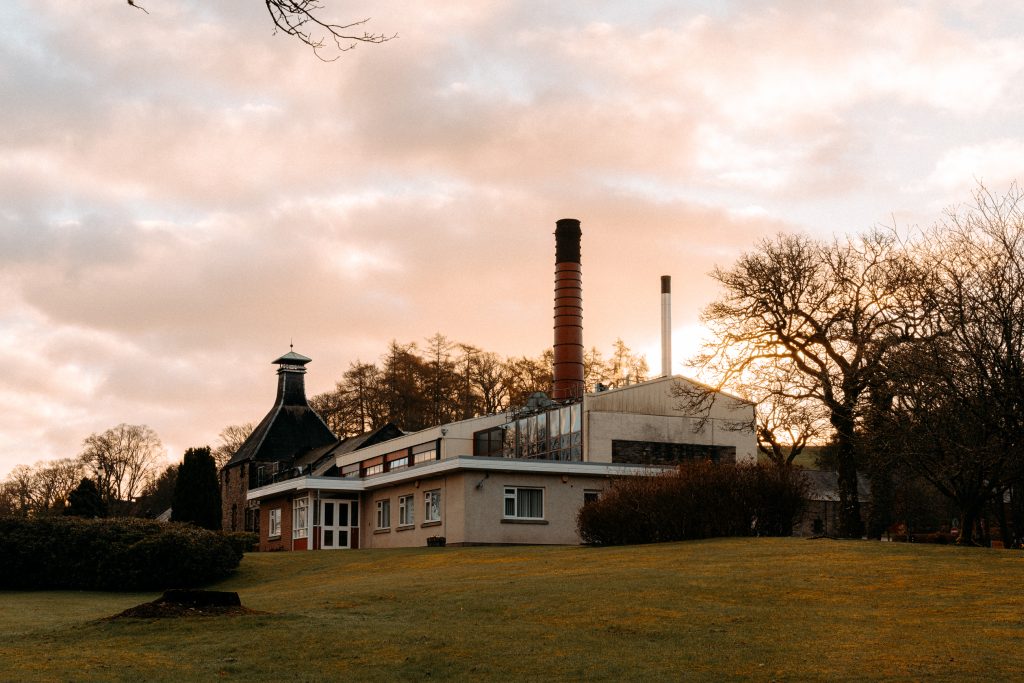
At the same time, she’s acutely aware that a 125-year-old distillery can’t stand still. “We respect our traditions,” she says, “but we also need to remain relevant to whisky drinkers today and tomorrow. We can’t be complacent and assume they’ll always find us interesting. We have to keep improving, exploring and innovating to make sure we’re ready for what comes next.”
Cordiner loves to frame that balance with a line from Gustav Mahler: “Tradition is not the worship of ashes, but the preservation of fire,” he says. “When Aberfeldy was built, the idea was that gold is in the detail. All these little attentions to detail add up. For me, that’s what Stephanie has done with the Red Wine Cask Series: it’s taking that celebrated Aberfeldy style and building on it, pulling out more of the nuanced notes of the house style.”
Advocacy, Storytelling and the limits of a back label
If you’ve ever tried to cram a complex cask story onto the side of a bottle, you’ll understand why Cordiner insists his role is more vital than ever. “For me, advocacy is a huge part of what we do,” he says. “Aberfeldy has such a rich story to tell, and it’s about getting that story out there. There’s so much nuance and detail in these cask finishes – there’s only so much we can tell you on the packaging.” That’s where tastings, bar trainings and events come in. As global ambassador he works closely with a network of local ambassadors around the world, including people like Tamara van der Schueren in the Benelux, to translate warehouse experiments into real-world experiences. “Consumers want to know more than ever about these whiskies,” he says. “Our job is to expand the story, connect the dots between the distillery, the cask and what’s in your glass.”
And, he adds with a grin, there’s another message that has to land clearly: “These red wine casks are limited editions. When they’re gone, that’s it. Whichever one is out now, I’d encourage anyone reading this: go and try it. If you don’t, you might never see it again. It’s a piece of history captured.”
A series without a single favourite
Ask Macleod which Red Wine Cask expression she prefers and she refuses to pick one. It’s not diplomacy; it’s the whole point of the series. “I really don’t have a favourite,” she says. “I love hearing what other people’s favourites are. You might think, ‘Oh, it’s red wine, it’ll all be the same,’ but like whisky, each wine has its own character: the grape, the terroir, the casks, the winemaker. That’s why wine and whisky work so well together in finishing.” Every element that shapes the wine mirrors something in whisky: where it’s made, how it’s made, the barrels it rests in. “The stories and techniques come together beautifully when we finish,” she says. Using different styles of red wine casks and watching different aspects of Aberfeldy’s character light up is what makes the series exciting for her and, she believes, for drinkers too. Cordiner, for his part, dodges the favourite question with a practical reminder: whatever you fall in love with today probably won’t be around forever. That sense of fleetingness is part of the magic.
Looking ahead: More wine, and more than wine
So where does Aberfeldy’s cask finish programme go from here? In one sense, the pipeline is endless. “There are so many wine styles out there, and the number seems to be growing by the day,” says MacLeod. “I don’t think we’ll ever run out of wine.” But the future isn’t just about swapping Burgundy for Barolo. The team is also looking upstream at what can be done inside the distillery walls: tweaks to fermentation, experiments with yeast strains, work on barley and mashing. None of those projects will see daylight quickly: “it’s at least three years before we can even call it Scotch whisky,” she notes. But they’re all part of the same long game. On the other side of the partnership, Cordiner sums it up simply: “Watch this space. There are exciting things to come.”
If the Red Wine Cask Series has shown anything so far, it’s that when the person telling the story and the person filling the casks are this closely aligned, Aberfeldy’s fire is in safe hands.