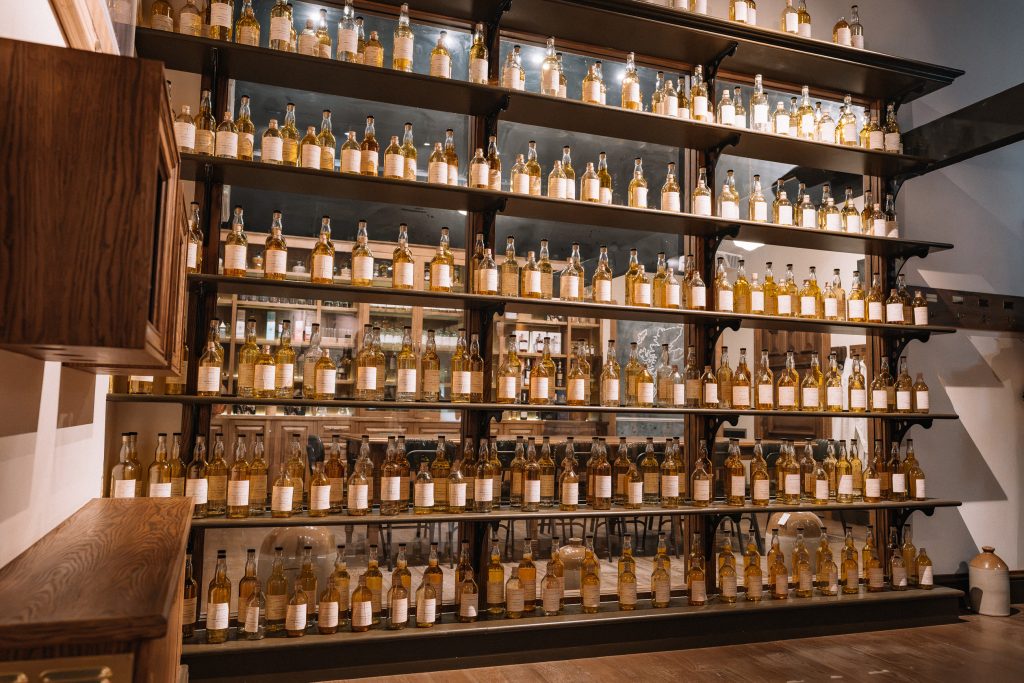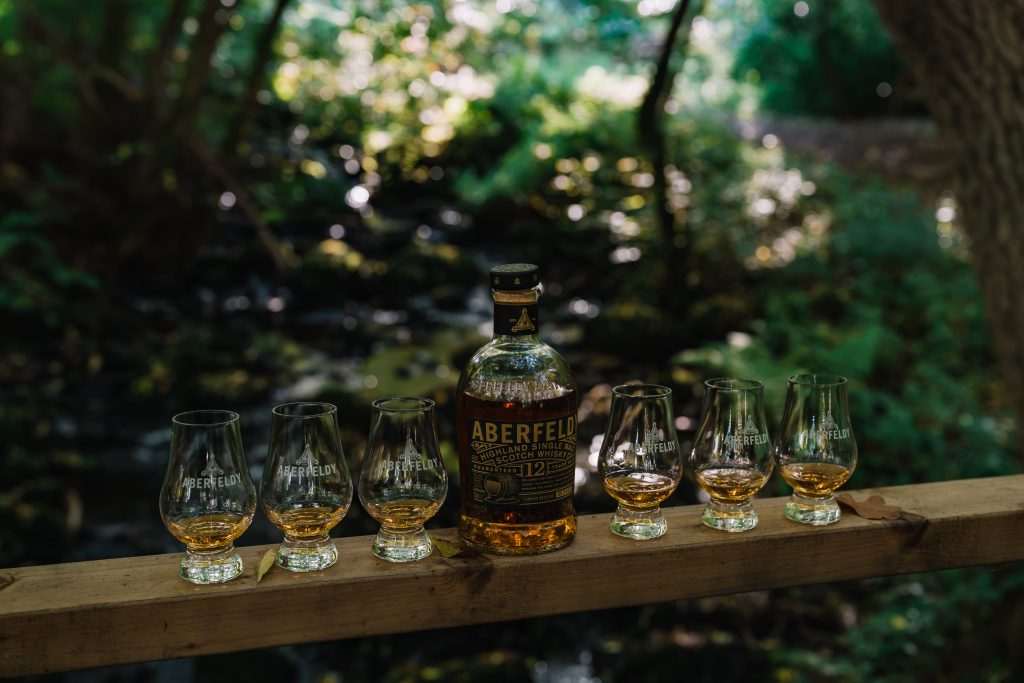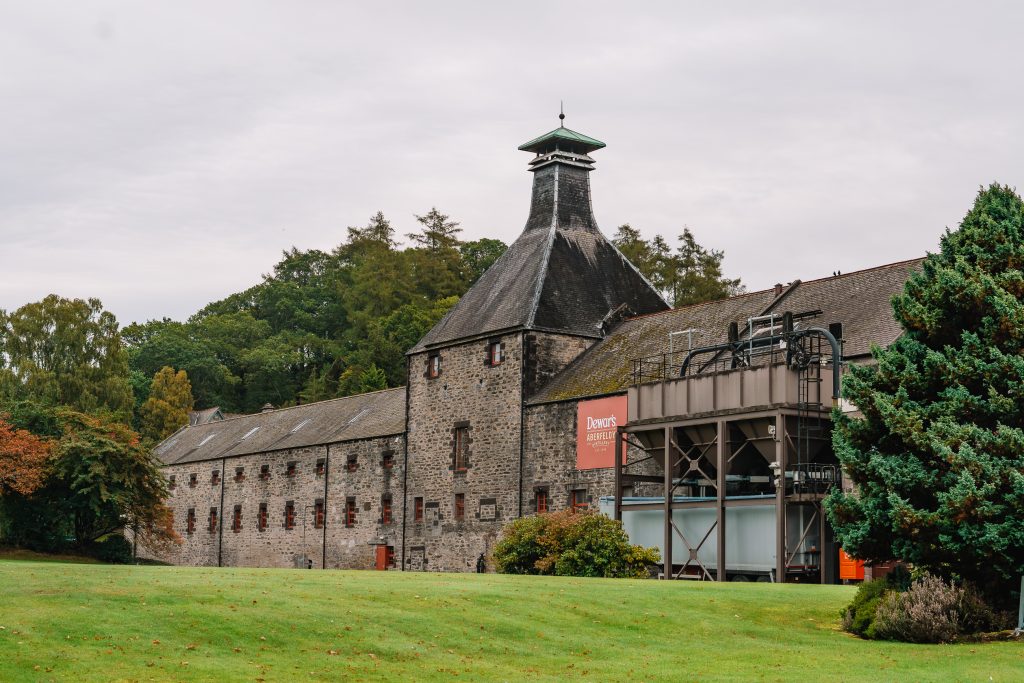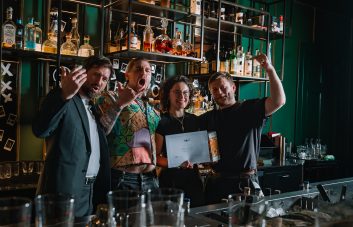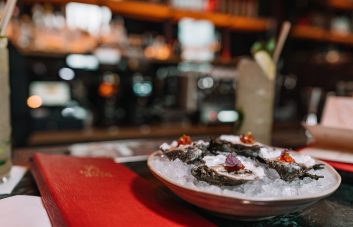
The menu card on the table at The Grandtully carries a small line drawing of a house in the corner and, at the top, a single word: Aberfeldy. Before anyone has sat down properly, a glass arrives. Aberfeldy 12, stirred with Moscatel, Campari and plum sake, finished with a pinch of salt. Campari brings the bitterness, Moscatel and plum sake the sweetness, and the salt pulls it together. It does what a welcome drink should do: it gets people talking. By then we had spent the afternoon a few miles up the road on the Aberfeldy distillery tour, and there was plenty to talk about.
Words & pictures by Albert van Beeck Calkoen
A Speyside voice in Perthshire
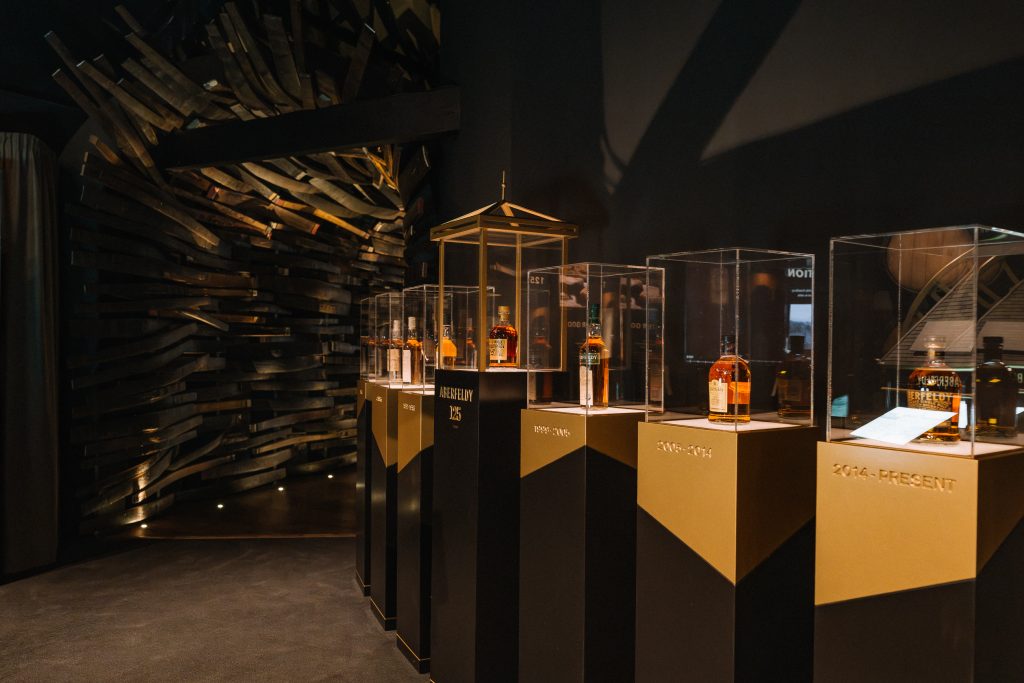
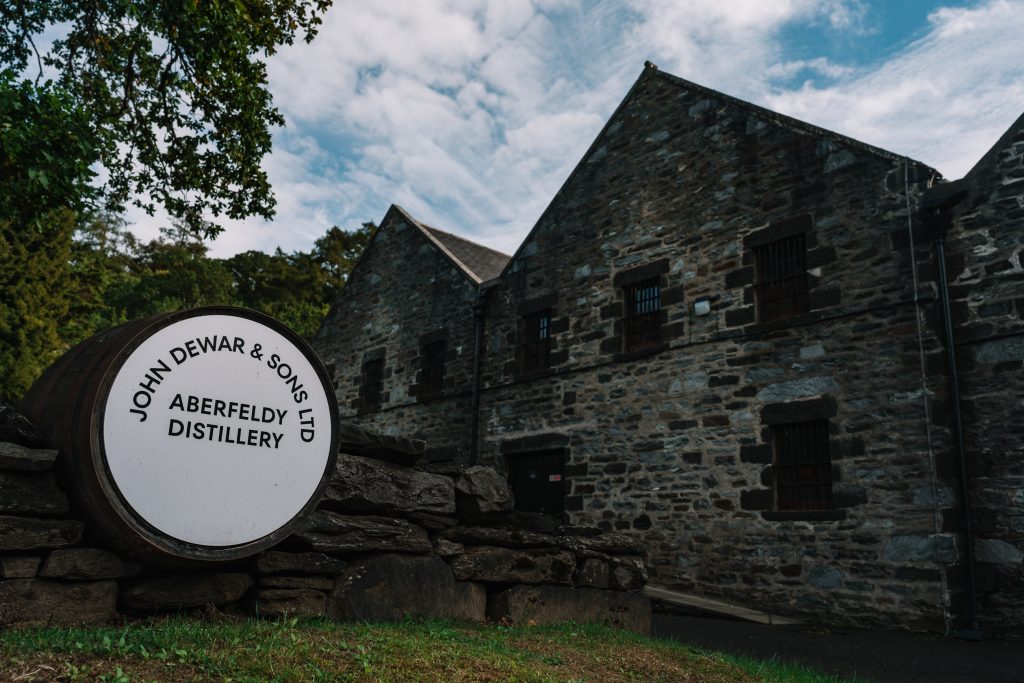
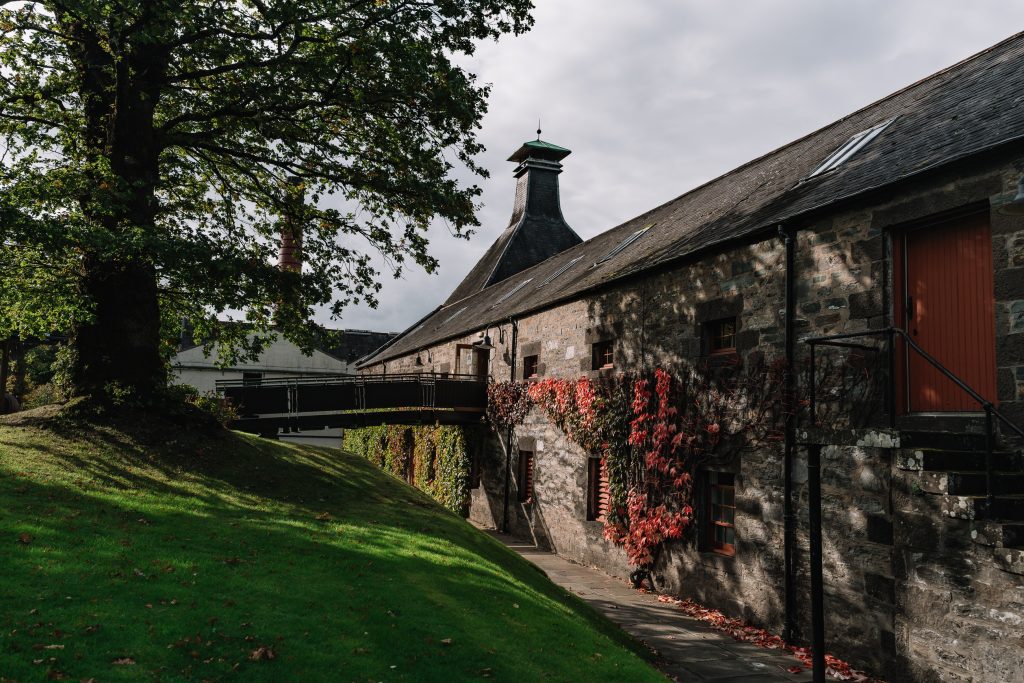
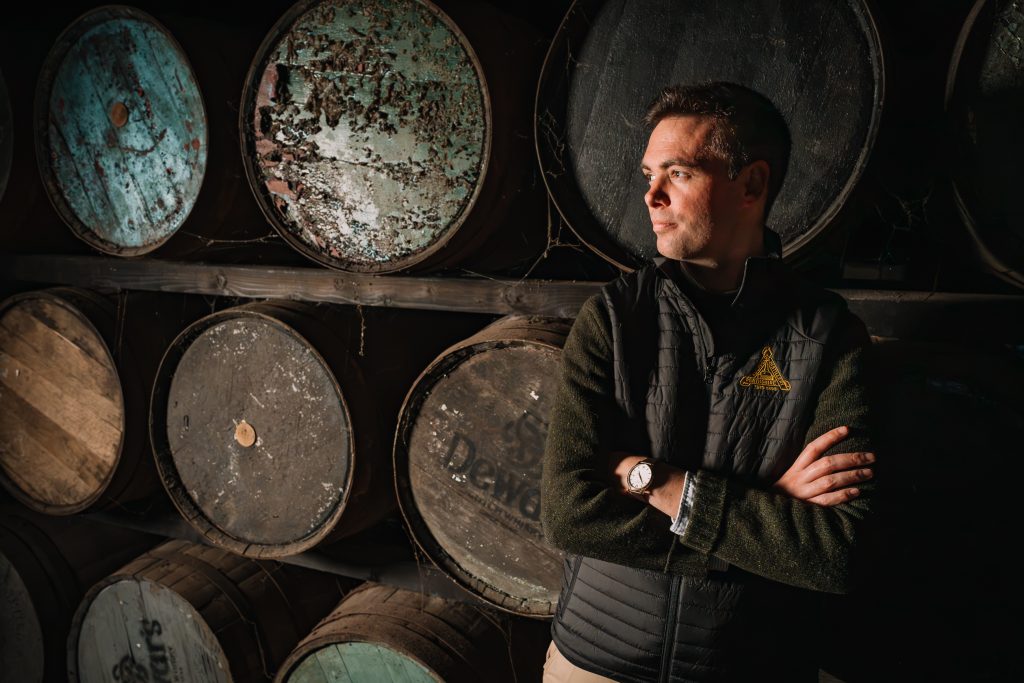
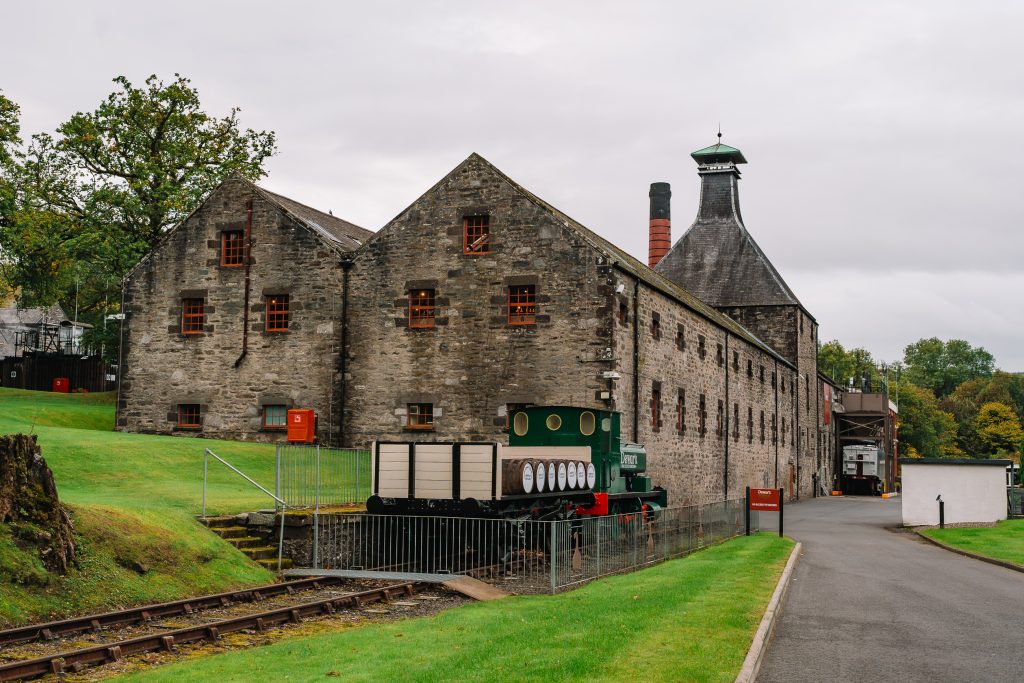
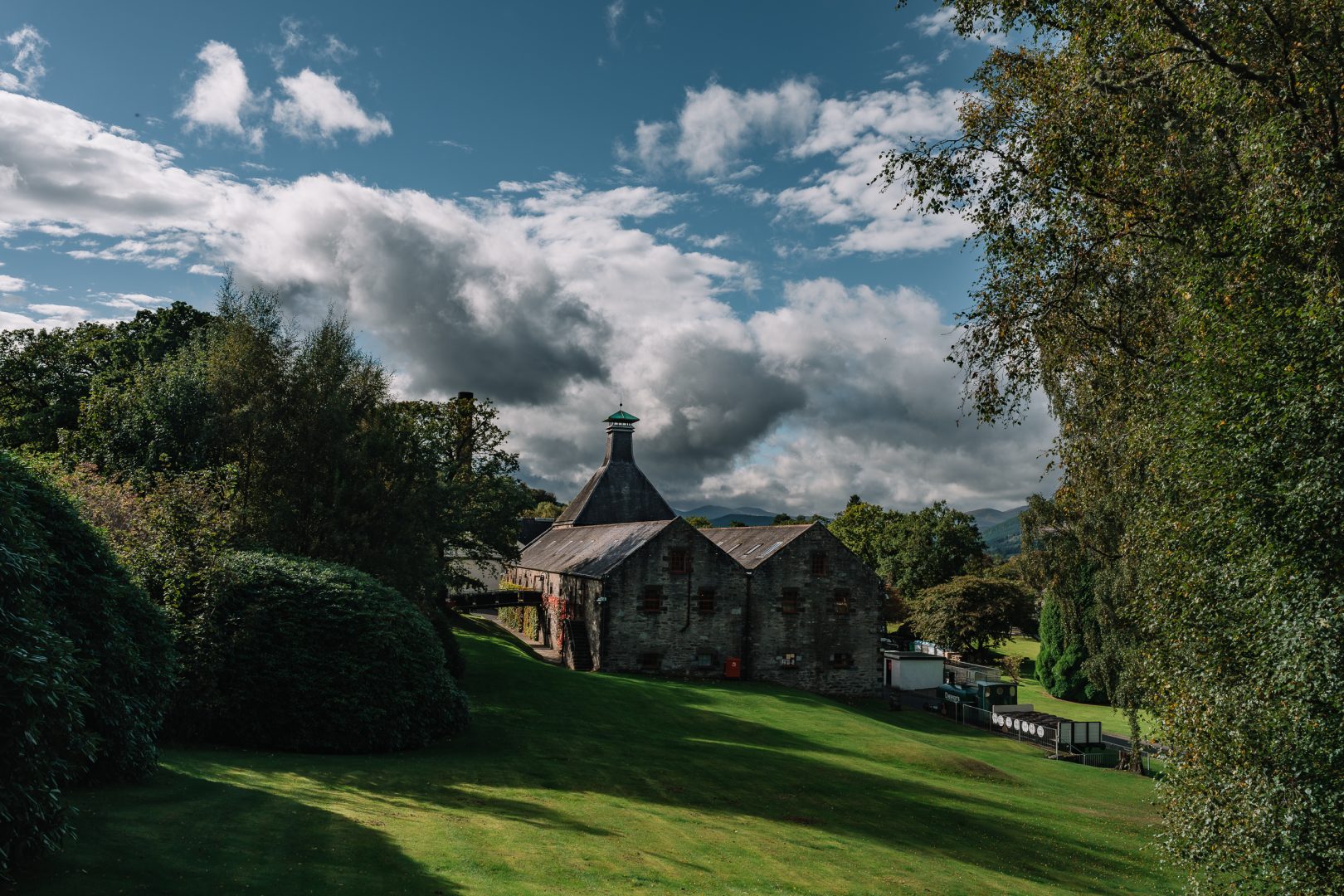
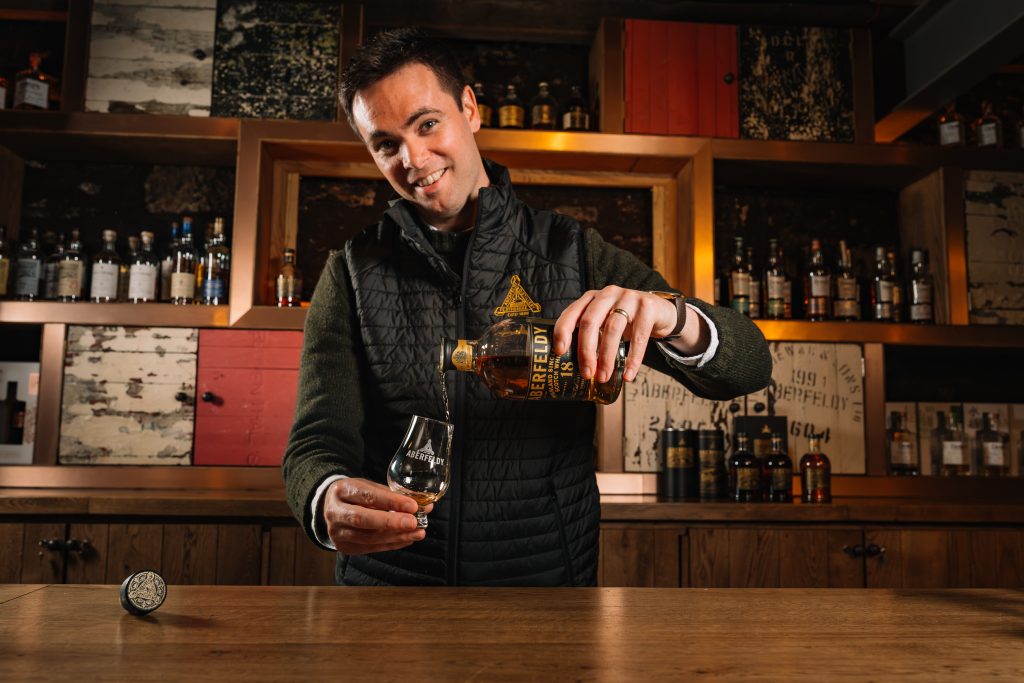
Our host for the day was Matthew Cordiner, global brand ambassador for Aberfeldy. He met us with an apology. His voice was hoarse after three days at the Whisky Show in London, and the mill next door was running, which meant he had to talk over it for most of the first room. Cordiner is not from Perthshire. He grew up in Craigellachie, in the heart of Speyside, in a house with a view of a distillery from his parents’ front window. His school friends became stillmen, coopers, washback coopers and barley farmers. “If I don’t know the answer,” he says, “I can literally go direct to the source.” He came into the industry as a tour guide, and it shows. He still has the guide’s instinct for the detail that makes a room come alive. Aberfeldy itself was built in 1896 by John Alexander and Tommy Dewar, sons of John Dewar, who was born on a croft near the village of Dull, a few miles away. The brothers needed a reliable heart for their blends, and Aberfeldy still plays that role: it is the malt at the core of Dewar’s blended Scotch. Since 2000 it has also stood on its own as a single malt, known for its honeyed sweetness and a gentle spice.
Seventy hours of patience
That honey does not happen by accident. In the tun room, Cordiner explains the arithmetic of fermentation. After about 48 hours, the yeast has done most of its work and the wash sits at around 9% alcohol. Some distilleries stop there. Aberfeldy lets it run much longer, to around seventy hours. “Any additional time in this process is for esterification,” he says. The extra hours are not about alcohol but about flavour: esters, the compounds behind the fruity, sweet and floral notes in a spirit. “We make a lot less whisky because of these long fermentations, but for those lovely sweet, honey flavours, that’s how you get them.” He reaches for a line from Tommy Dewar, one of many the founder left behind: “The only thing you get in a hurry is trouble.” It is a fitting motto for a room where the main ingredient is time.
Wood that holds, not wood that flavours
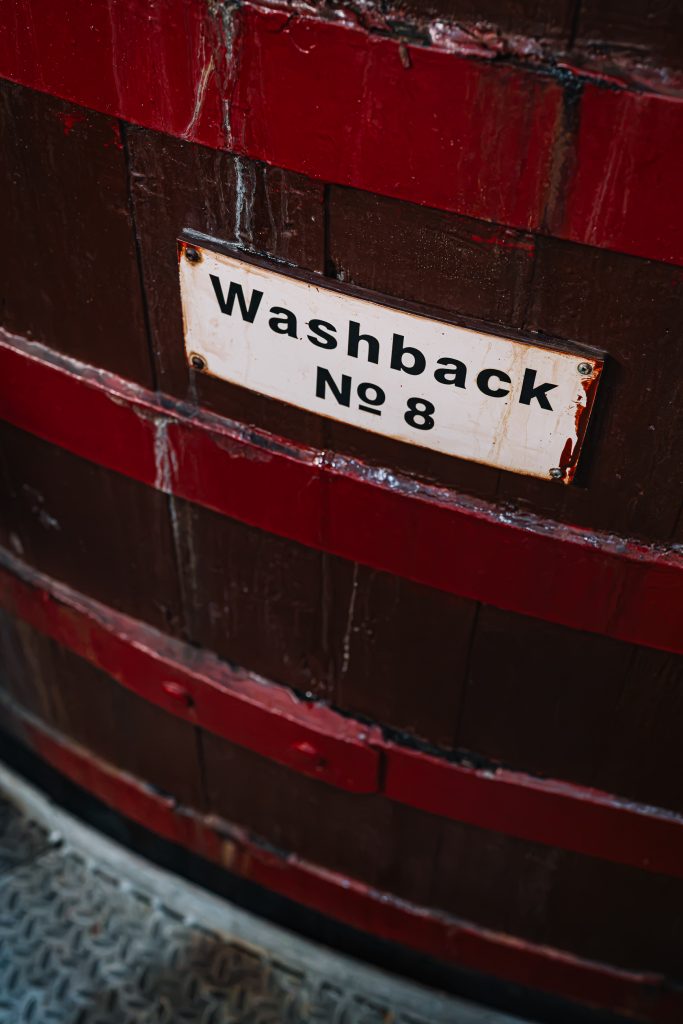
The washbacks themselves are worth a closer look. Most are made of Siberian larch, with two recent replacements in Oregon pine. The choice of timber has little to do with flavour. The wash does not stay in the vessels long enough to take much from the wood. What matters is the tree: tall, straight trunks that give long, clean staves. Each stave runs in a single piece from the top of the vessel to the floor. There are no nails in the body. The hoops are pinned in place, but the wood itself is simply precision cut, stave against stave, held together by pressure alone. Wood, Cordiner points out, has a quirk. You can clean it and sanitise it, but you can never fully sterilise it. Some microorganisms always remain. Whether that makes a measurable difference by the time the spirit has passed through the stills is debatable, and most experts say it does not. Aberfeldy keeps wood anyway. Every time a washback needs replacing, it is replaced in wood. That choice keeps a rare trade alive. Building washbacks is a specialist craft, and according to Cordiner there is really only one washback cooper left: Joseph Brown Vats of Dufftown, a company that travels around the world to build these vessels for distilleries. “AI won’t take these jobs,” he says.
A still house with a removable roof
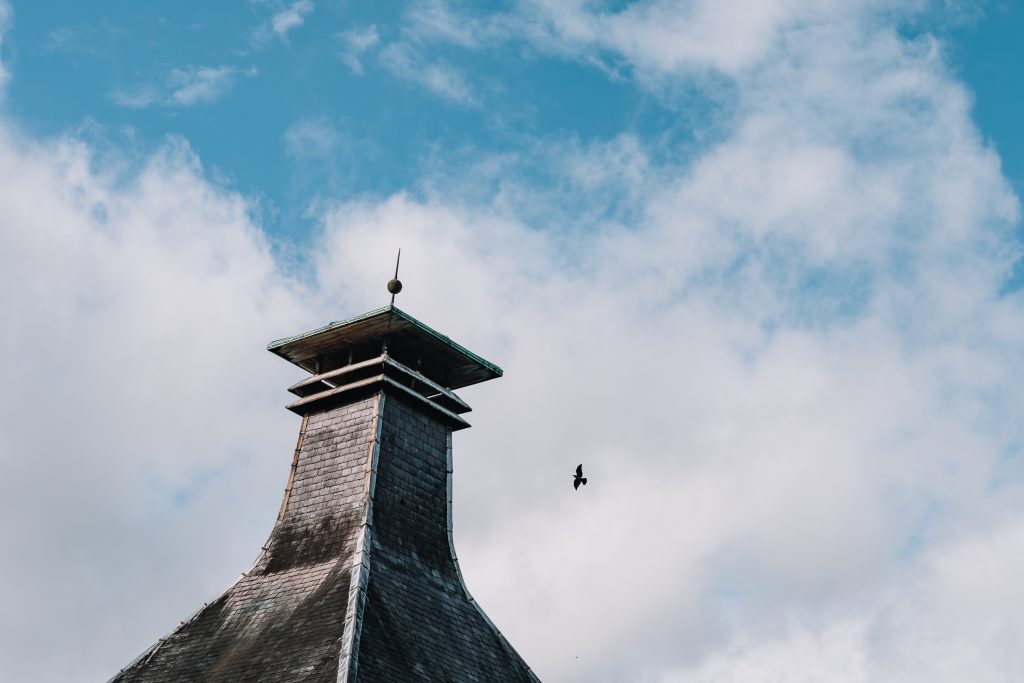
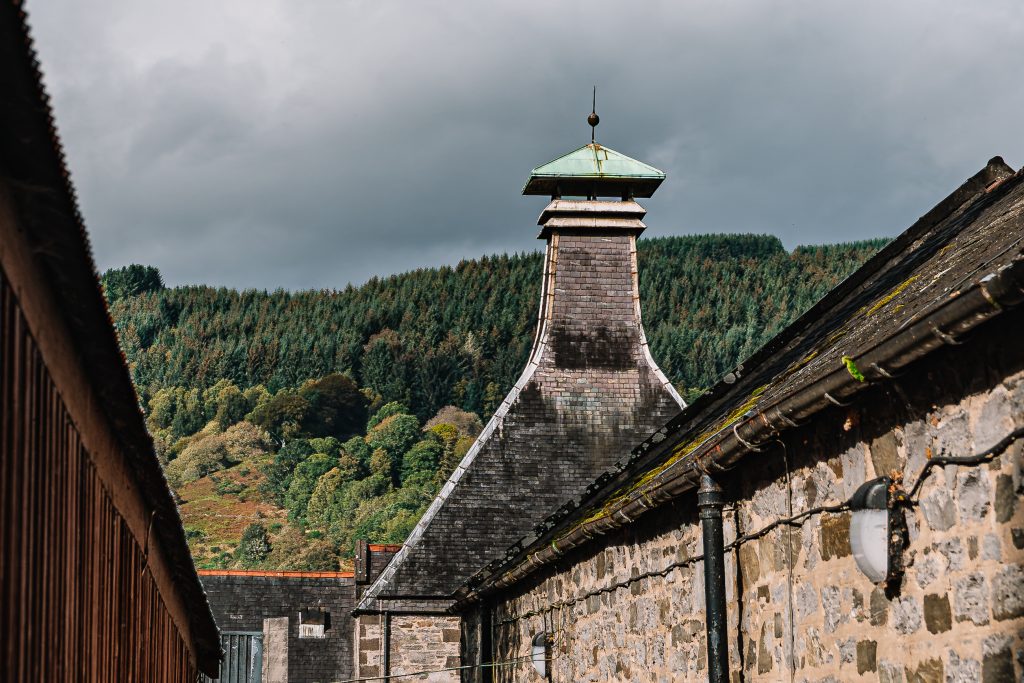
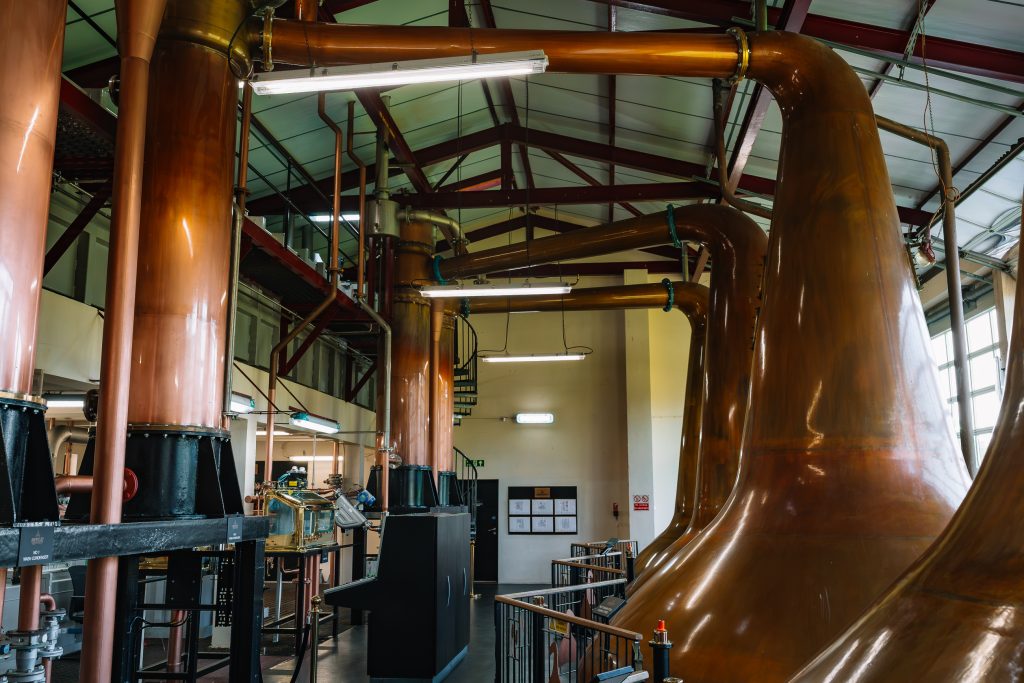
The still house looks the way it does for a practical reason. In the old days, when a still had to be replaced, the walls were stone, and an engineer had to take the roof off to lift the copper out with cranes. The current building, designed in the 1960s, solves that elegantly: today the building can simply be opened up and the stills rolled in and out. The design was not unique to Aberfeldy. Distilleries that belonged to the Distillers Company Limited and expanded in the 1960s and 1970s were given the same still house. Cordiner lists a few, from Speyside to Islay. “You know it was expanded in the 1960s and 70s if it has this style of window,” he says. Once you know it, you start spotting it everywhere in Scotland. Inside are two wash stills and two spirit stills. They are not all the same age. Stills wear out and are replaced one at a time, a few years apart, partly because a new still is a serious expense. The coppersmiths at Forsyths keep the exact dimensions on file, so that each new still matches the one it replaces. How serious is the expense? Cordiner does not give a number. “All I’ll say is, the head of Forsyths drives a very nice car. His wife drives a very nice car. His kids drive very nice cars.”
Where the good stuff runs
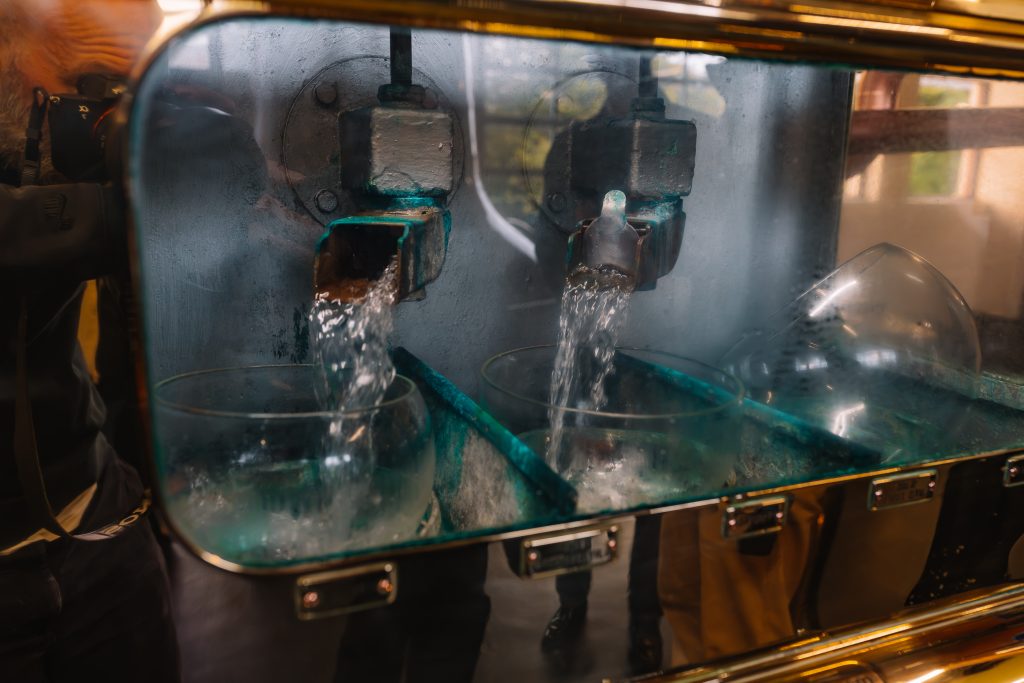
The spirit still is where the distiller’s judgement comes in. The first spirit to come off carries unwanted flavours from the end of the previous run. These foreshots run for about thirty minutes before the flow is switched to the middle receiver, where the heart of the run is collected over two to three hours. When the strength drops, the flow moves again, and the tails, or feints, run off. Nothing is wasted. Foreshots and feints are collected and mixed with the next batch of low wines from the wash still, so some alcohol makes the journey more than once before it is finally cut into the heart. Today the cut points are controlled electronically. All of it flows through the spirit safe, the brass and glass box that once needed two keys to open: one held by the distillery manager, the other by the excise officer who lived on site. Everything is now tracked by computer, but the box still does its job. “Every bottle of Aberfeldy you see all over the world has come from these stills, through this box,” Cordiner says. The production team that makes all of it is ten people strong, a father and son among them.
Very little waste
The tour ends outside, with a view of what happens to everything that is not whisky. Water left over after distillation runs through a reed filtration bed before it returns to the River Tay. The spent husks from the mash tun are combined with pot ale, the yeasty residue left after the first distillation, which is boiled down into a syrup. Together they are pressed into pellets that find a second life, for example as fuel. “We don’t call it a by-product anymore,” Cordiner says. “We call it a co-product. There’s a use for it.” Energy is the bigger challenge, mostly in the form of heat. Aberfeldy has started to chip away at it. A newer yeast gives a slightly stronger wash, which means less water has to be pumped, heated and cooled for the same amount of spirit. On the condensers, flow meters now measure exactly how much cold water is needed, instead of running it at full flow regardless of how much vapour is actually coming off the stills.
What happens after the stills
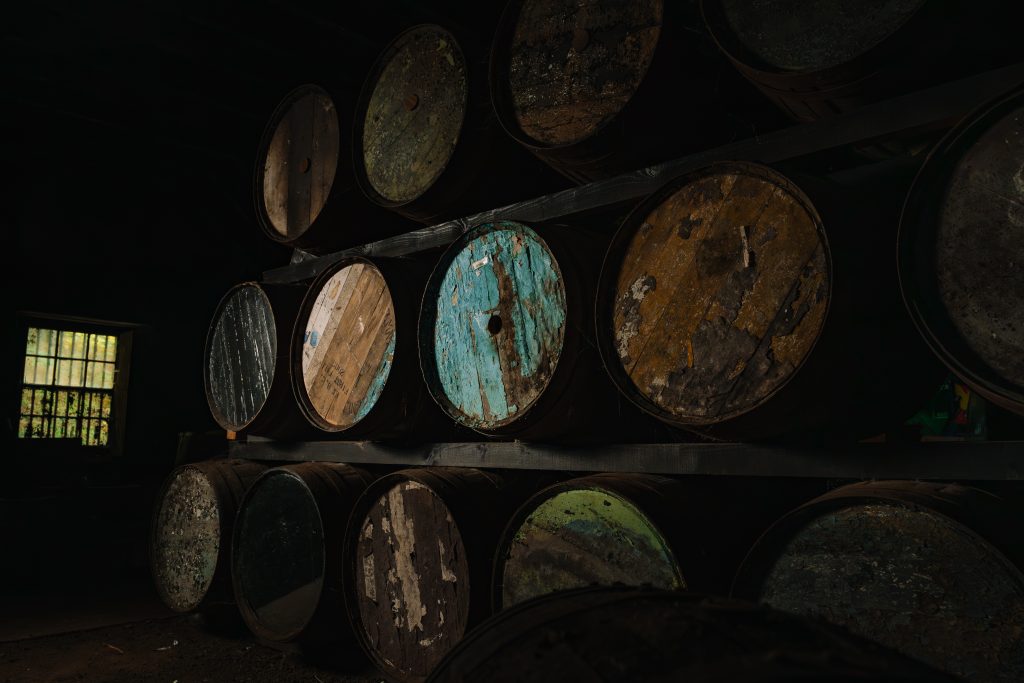
The distillery visit stops at the spirit safe, but the story of Aberfeldy does not. Once the new make is filled into casks, it passes into the hands of Master Blender Stephanie Macleod and her team, who decide how and where it matures. One of the more visible results is the Red Wine Cask Series, in which Aberfeldy is finished in casks from wine regions such as Pomerol, Pauillac and the Napa Valley. I spoke to Macleod and Cordiner about that programme in an earlier piece about the Aberfeldy Red Wine Cask Series.
Dinner at The Grandtully
Which brings us back to the table. The Grandtully Hotel by Ballintaggart sits in the village of Grandtully, on the banks of the Tay, a short drive downstream from Aberfeldy. It is a small, food-led hotel in a Victorian building, a sister to Ballintaggart Farm nearby, and it holds a Michelin Key. The kitchen works with what the surrounding estates, farms and foragers bring in, and the dinner made that clear from the first plate. After the welcome drink came bread: Ballintaggart’s own sourdough with whipped butter, alongside fat Gordal olives and slices of deep red venison salami, the kind of local touch that tells you where you are without any fuss. The starters offered a choice. On one side, sea trout cured with beetroot and whisky, which turns the edges of the fish a deep magenta, served with horseradish yoghurt, orange, dill and rye. On the other, salt-baked beetroot with burrata, hazelnut and sherry vinegar: earthy, creamy and sharp in turn. Both came with a glass of Mâcon-Villages from Bourcier-Martinot in Burgundy, a 2024 Chardonnay to sit alongside the cream and the cure.
For the main course, bavette steak arrived with a layered potato terrine, wild mushrooms and a peppercorn sauce. The alternative was herb gnocchi with wild mushrooms, broccoli, romesco, sunflower seeds and Isle of Mull Cheddar, a dish that borrows from Spain and the Hebrides at the same time. The wine moved to Spain properly: a 2024 Garnacha from Rioja to go with the pepper and the mushrooms. Dessert was a lemon posset with Perthshire cherries and pink peppercorn madeleines on the side: sharp, sweet and with a small kick at the end. Between and after the courses, the Aberfeldy came out. Several special bottles made their way around the table, among them the 21 Year Old. It was the right way to end the day. In the afternoon we had watched the wash bubble, the stills run and the new make pass through the spirit safe, clear and young. At night, in a dining room a few miles downstream, we tasted what two decades in a cask can do with it. Somewhere in between those two moments sits everything you cannot see on a distillery tour: the warehouses, the casks, the years. Aberfeldy takes its time with that part. After a day in Perthshire, it is easy to see why.