A hand-picked class of Dutch bartenders spent the past months with kintsugi, dashi and Japanese whisky. Then each had to prove what they had learned in a single glass.
In Japan, some bartenders choose one cocktail and make it again. And again. Every day, under the eye of a mentor, for as long as it takes. The practice has a name, Kaizen, and it means continuous improvement: a drink is never finished, only better than it was yesterday. That idea sits at the heart of the Dojo Academy, the House of Suntory’s program for bartenders in the Netherlands. The class of 2026 has now presented its final drinks, and three of them rose to the top of the class.
Japanese Philosophy and Cocktails
“Kaizen is rooted in Japanese traditions of craftsmanship and continuous improvement, the Dojo Program encourages bartenders to look beyond the bar to elevate what happens behind it,” explains Lyndon Hachey, brand ambassador for the House of Suntory in The Netherlands. Still observed today, iconic bartenders such as Ueno-San (owner of Bar High Five in Ginza, Tokyo) or Hisahi Kishi (owner of Star Bar Ginza) are known for the kaizen classics. “Having had the chance to try Ueno-Sam’s White Lady, knowing over decades he’s sought to improve that drink each day, observing each integral part of the drink really brings kaizen to life.”
A place in the Dojo is not a matter of sending in a CV. Every applicant fills in a questionnaire, which Suntory has used and refined over the past three years. It looks for knowledge of the House of Suntory and of Japanese culture, but above all for ambition. “We encourage everyone to apply to the House of Suntory Dojo program, it’s not a program that singularly targets the highest profile bartenders, rather we want dedicated industry professional seeking opportunities to grow and improve as they build their career within this incredible industry,’’ Lyndon says. This year, 9 bartenders made the cut and completed the program. Each was assigned a classic cocktail and given one task: take it a step further, using what the program taught them.
Three pillars, four masterclasses
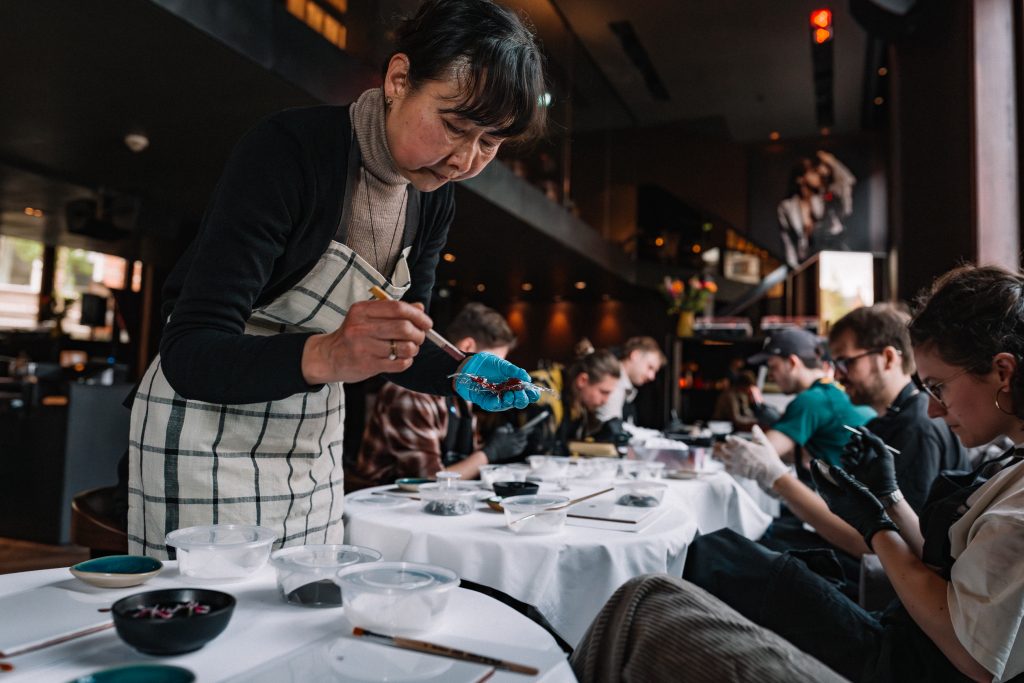
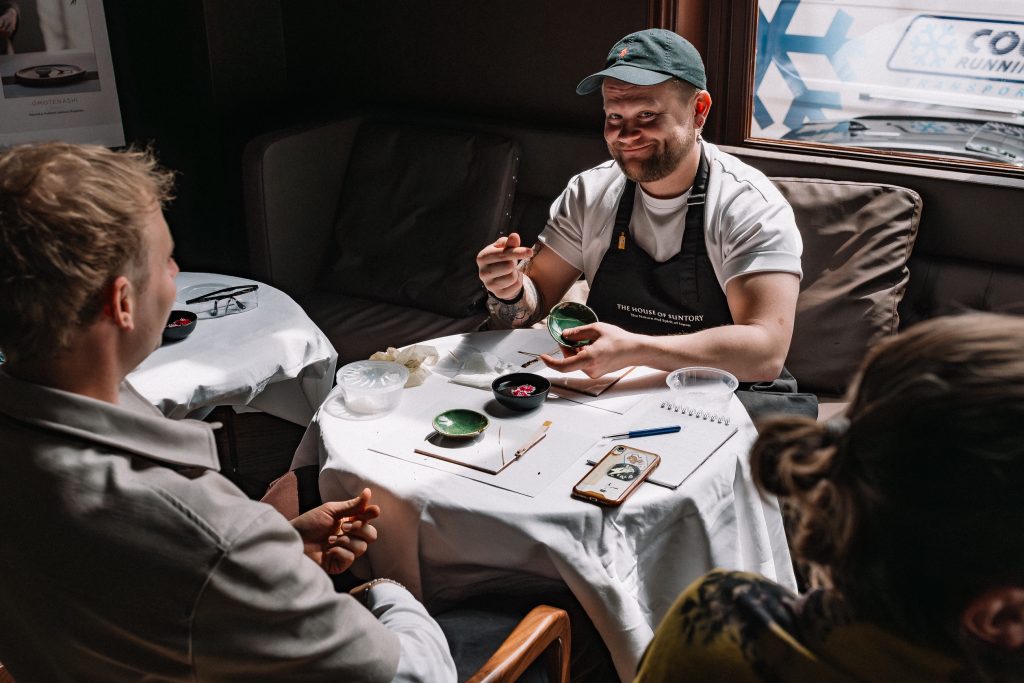
Four masterclasses shaped the journey, each led by a master of their craft: people who trained and refined their skills under Japanese masters. Together, they traced the three pillars of the House of Suntory: Wa, Monozukuri and Omotenashi. Wa stands for harmony with Japanese people and nature, and it opened the program through kintsugi, the Japanese art of repairing broken ceramics with tree sap and gold. For the bartenders it became a lesson in wabi-sabi, the beauty of imperfection, and in seasonality. Monozukuri, Japanese craftsmanship, took the class to Fuku Ramen in Amsterdam, and away from the bottle altogether. Tare, dashi, seaweed, soy and salts: the building blocks of a good bowl of ramen turned out to be the building blocks of many cocktails too. In conversation afterwards, it was the session the bartenders mentioned most.
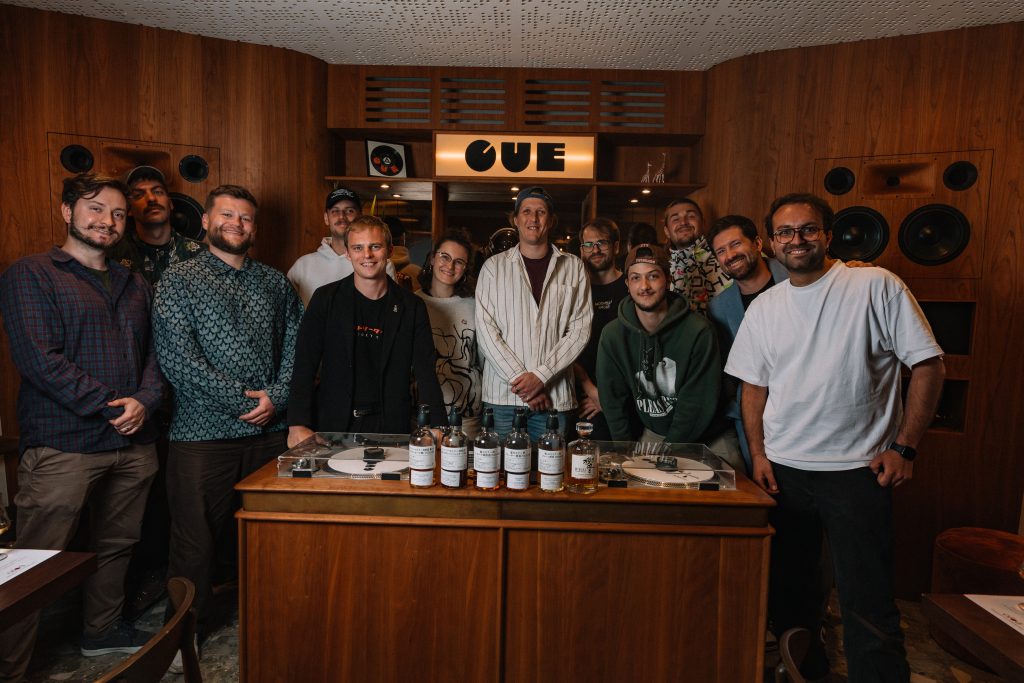
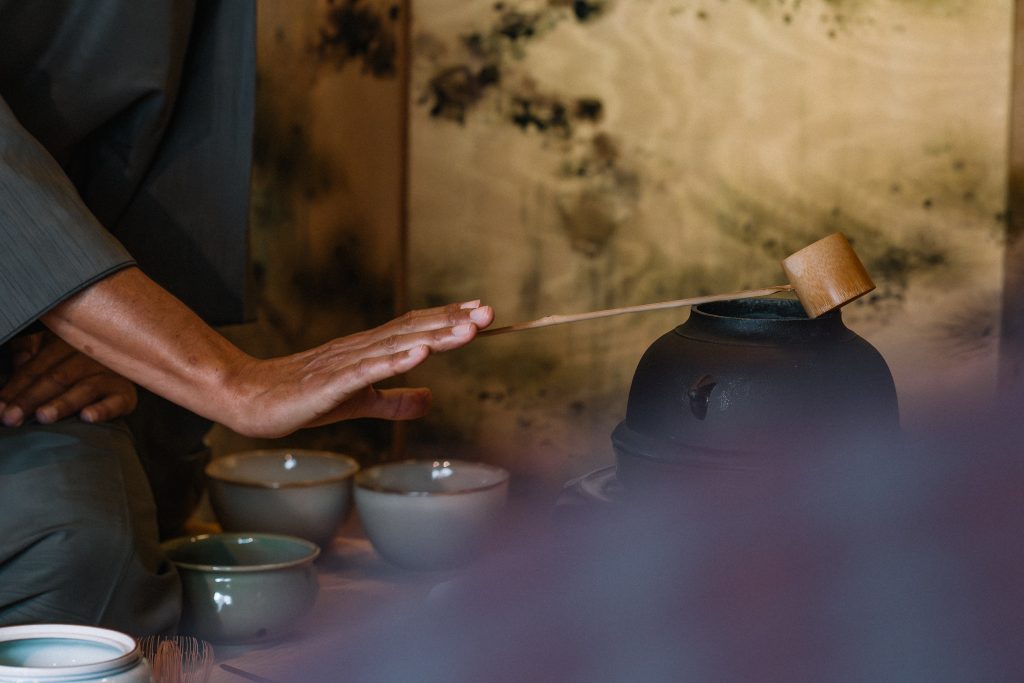
Omotenashi, authentic Japanese hospitality, was at the heart of the third workshop, which came in two parts. The first was a traditional Japanese tea ceremony. “We experienced a traditional Japanese tea ceremony, to enlighten our bartenders on different aspects of Japanese life, philosophy and practice,” Lyndon says. “The idea is that they channel what they’ve taken from that philosophy and apply it to their kaizen classic.” The second part took place at Cue, where James Bowker, Global Advocacy Manager for Suntory, guided the group through Japanese bartending philosophy and the art of whisky blending. In the final, closing session, Zoran Peric, international brand ambassador for the House of Suntory, taught the group the craft of carving ice.
Through the eyes of the head judge
Zoran also headed the judging committee. For him, the brief looked simple on paper. “It was a take on a classic,” he says. “But within their Dojo journey they had different experiences and workshops, and that’s something they could implement into their serves.” The judging started before the first sip. “From the first approach of the glass towards you, which is the only omotenashi we can experience as judges, to aromas, flavors, balance, what the drink delivers,” Zoran explains. Here the third pillar returned: hospitality judged from the moment a drink leaves the bar. The jury was looking for a point of difference: a garnish, a serve with more to it than glass and ice, or a familiar drink with an unexpected layer. As an ice specialist, he paid extra attention to temperature and dilution. “They have to come quickly from the bar to the judges, and the temperature has to be absolutely right, so our palates get the real experience the bartender wants us to have.” His verdict on the class was generous, but honest. “Some drinks delivered more than others,” he admits. “But every drink carried a little of that.”
#3: Vitaly Alekseyev, Taxman Cocktail Room, Old Fashioned
Vitaly, co-owner of the Taxman Cocktail Room in Amsterdam, drew the Old Fashioned: a drink with almost nowhere to hide. He built it on Toki and changed two things. The sugar made way for a reduction of Spanish wine, and the dilution came from a hojicha cold brew. That second idea came straight from the ramen kitchen. “They showed us how to use tare, and that’s why I did the dilution this way: that was my tare, pretty much,” he says. “We also tried hojicha tea during that seminar, and I fell in love with the flavor.” The garnish didn’t go in the glass at all. Vitaly served it on the side, as a warm napkin carrying the drink’s aromas. “When you wipe your hands you get more of the flavors,” he explains, “but when you smell the drink you still get the whisky.” His takeaway is a matter of pace. “Taking my time, not rushing things. Whenever I make drinks now in my own bar, I take my time and perfect it,” Vitaly says. “The whole Kaizen idea is perfecting it slowly, but gradually.” Asked if he had anything to add, he kept it short: “Come to my bar.”
#2: Nikita Panteleiko, Taiko Amsterdam, Gimlet
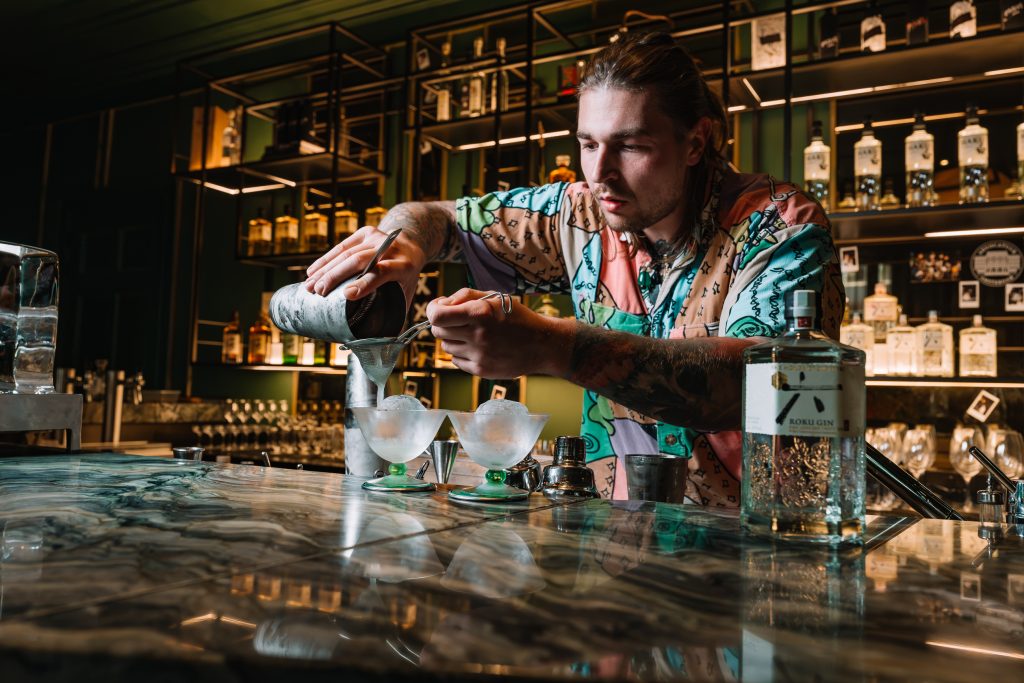
Nikita’s Gimlet started with the sea. “Waves can be calm and waves can be rough, like the sea when sailors go out sailing,” he explains. The drink had to hold both. The kintsugi masterclass left the deepest mark. Instead of ceramics, Nikita applied the technique to glass, and had to invent a method along the way: sanding down the rims of simple glasses until the sharp edges turned soft, then fixing golden paint to them with a little sugar syrup. “It wasn’t an easy mission,” he admits. “But the experience made me understand that nothing is impossible.” A Gimlet is traditionally served without ice. He served it over a large ice ball, as a tribute to the craft behind the ice itself, and chose and temperature-checked the blocks used for shaking. The biggest shift, though, was in the balance. “For the first time, I decided not to hide the spirit behind the balance of the drink, but to actually represent it.” Ingredients echoing Roku gin’s botanicals, a slice of ginger and lime peels shaken with the drink pushed the gin forward. The goal, in his words: “A version of the Gimlet that you’ll definitely recognize as a Gimlet, but you won’t understand what’s happening with it.” What stayed after the Dojo is less about technique than about people. He now asks guests more questions, about the season, the ice, their taste. “I want to give the type of hospitality that highlights the guest, instead of pushing my own ideas of what I want to represent,” he reflects. “I think I became a different version of myself, one who listens more, cares more about people, and wants to give more, even when it wasn’t asked.”
#1: Rosana Englisova, Cue, Highball
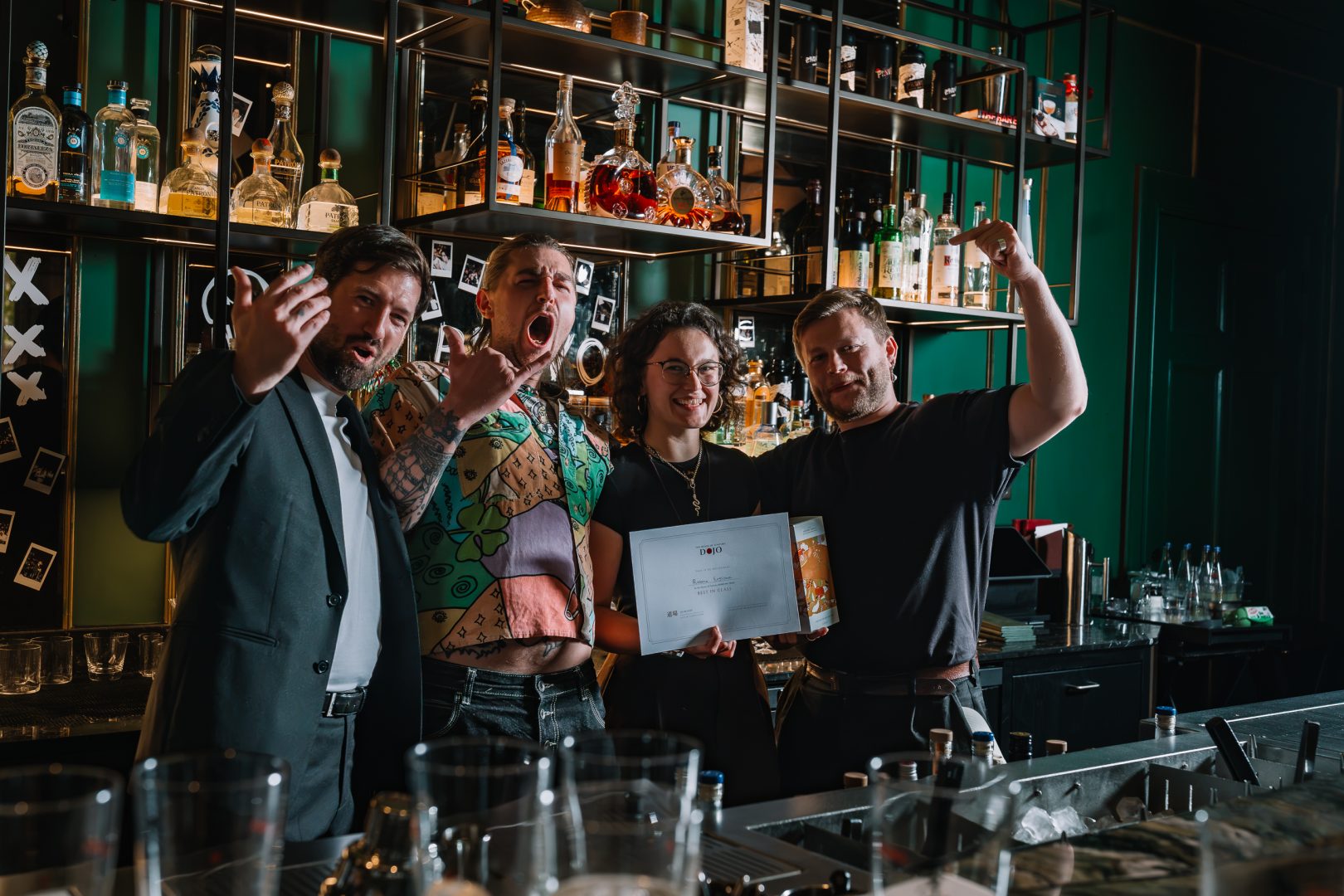
The winning drink had two ingredients. Rosana drew the Highball, whisky and sparkling water, and decided that the way forward was not to add, but to perfect. Her inspiration was the tea ceremony. “We were really careful to do it exactly the correct way, so it comes out as tasty and as nice as possible,” she recalls. “What I took from the workshops is mostly the focus on the best possible expression of what you’re doing.” So she started with the water. Rosana tasted a long line of mineral waters against Toki, expecting a premium brand to win. “In the end Spa won,” she notes. She carbonated the water together with the whisky, and served it over two rocks of clear ice, broken with Zoran’s help during the ice session. Then she waited. The ice had to temper first, so the cold, carbonated pour wouldn’t crack it. The result: perfectly clear ice under an extremely lively, spicy highball. What she carries into her daily work comes from the ramen kitchen. “We took a bunch of different ingredients and added little drops of them to make a better highball,” Rosana says. “Maybe just a little dash of something can take a drink to the flavor profile I want and balance it perfectly, without adding extra soda or anything else.”
One step at a time
There is a quiet logic in the ranking. The top three students did not win by piling on ingredients. Nikita let the gin speak for the first time, Vitaly gave an Old Fashioned a new sense of time, and Rosana won with the simplest drink in the room, made as carefully as a bowl of tea. That is Kaizen in practice. Not reinvention, but one step forward, then the next. For the class of 2026, the program is over. For the next class, it is about to begin. Which masters will guide the Dojo of 2027 is still under wraps, but if this year is any measure, the bartenders who walk in will not be the same ones who walk out. The first step, as always, is the questionnaire.
Next stop: Japan
For Rosana, the Dojo does not end in Amsterdam. As best in class, she earns a place at the Suntory Dojo Forum, where she joins other best-in-class Dojo students on a journey to Japan. She will visit both the Yamazaki and Hakushu distilleries, take part in a range of immersive Japanese experiences, dive into Japanese bar culture, and explore Japanese craftsmanship and its connection to nature. Along the way, she and her fellow students will connect with bartender mentors from around the world. It is the three pillars again, this time at the source: Wa in the forests around Hakushu, Monozukuri in the stills of Yamazaki, and Omotenashi behind the bars of Japan itself.