Some restaurants build a cocktail list as an afterthought, a handful of easy sellers to keep the bar busy while the kitchen does the real work. Lucky Duck Amsterdam takes the opposite approach. Here, the drinks are developed in direct conversation with the Asian-inspired menu, and the pairing shows in almost every glass.
A Menu Built Around the Kitchen, Not Beside It
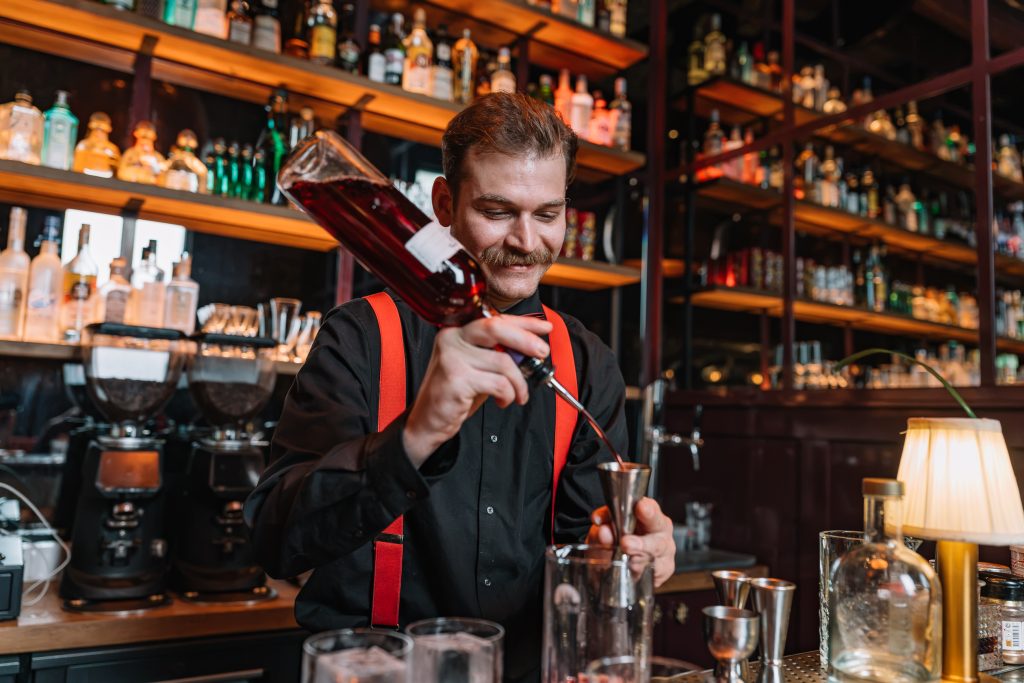
The cocktail list at Lucky Duck is refreshed every three to four months, and each new season starts from the food rather than from a spirit or a trend. The bar team looks at what the kitchen is doing and works backward from there, translating dishes and their flavour logic into drinks. It is a slower way to build a menu, but it explains why the pairings feel intentional rather than convenient. Behind the current list is a single bartender running the technical side largely solo: recipe development, batching, prep. Most of what lands in the glass is prepped in advance and built through small-batch processes rather than made to order from scratch, which keeps service smooth without sacrificing the more elaborate techniques the drinks are built on: fat-washing, clarification, cold infusion, house-made cordials.
The Cocktails
The Tom Yam-inspired sour takes the classic Thai soup as its blueprint. Coriander, lime juice, lime leaf and birdseye chili form the backbone, rounded out with coconut to soften the heat. It is spicy and citrus-forward, with the coconut keeping it from tipping too far into aggression. The A5 Negroni reworks the Negroni through a fat-washing process: the classic components are infused with fat, rested, frozen, and filtered to pull in a rounder, savoury texture. It is finished with a nori sheet for a quiet umami note, a small detail that shifts a familiar drink into something considerably more layered.
The Tokyo Paloma starts with a two-day cold maceration of gin with shiso leaf, combined with grapefruit juice and a grapefruit syrup and topped with soda. The sweetness can be adjusted to taste, since the Paloma format tends to land on the drier side and not every guest wants it there. It arrives with a dehydrated grapefruit wheel and a shiso leaf, tying the garnish back to the base spirit.
The Mango Sticky Rice translates the Thai dessert into a drink. Bacardi rum is infused with jasmine rice and fresh mango at low temperature for two hours, then filtered. A separate mango cordial, made from mango juice and purée with an acid mix, is combined with the infused rum and mango liqueur, then run through a coconut milk clarification: the coconut milk is warmed to encourage curdling before filtering through a coffee filter. A touch of soy sauce and a pandan leaf are added for colour and a savoury undertone, giving the drink real structural depth for something that reads as dessert.
The Sichuan Melon, one of the newer seasonal additions, pairs a melon liqueur base with a watermelon liqueur and a house watermelon cordial, brightened with lime and finished with a foam that stands in for the green rind of the fruit.
For dessert, the bar’s take on mochi and strawberry combines fresh strawberry, strawberry liqueur and champagne, clarified through a milk wash. It is served alongside a small chocolate element on the side. It doubles as a course guests order mid-meal as often as at the end of it.
The Food
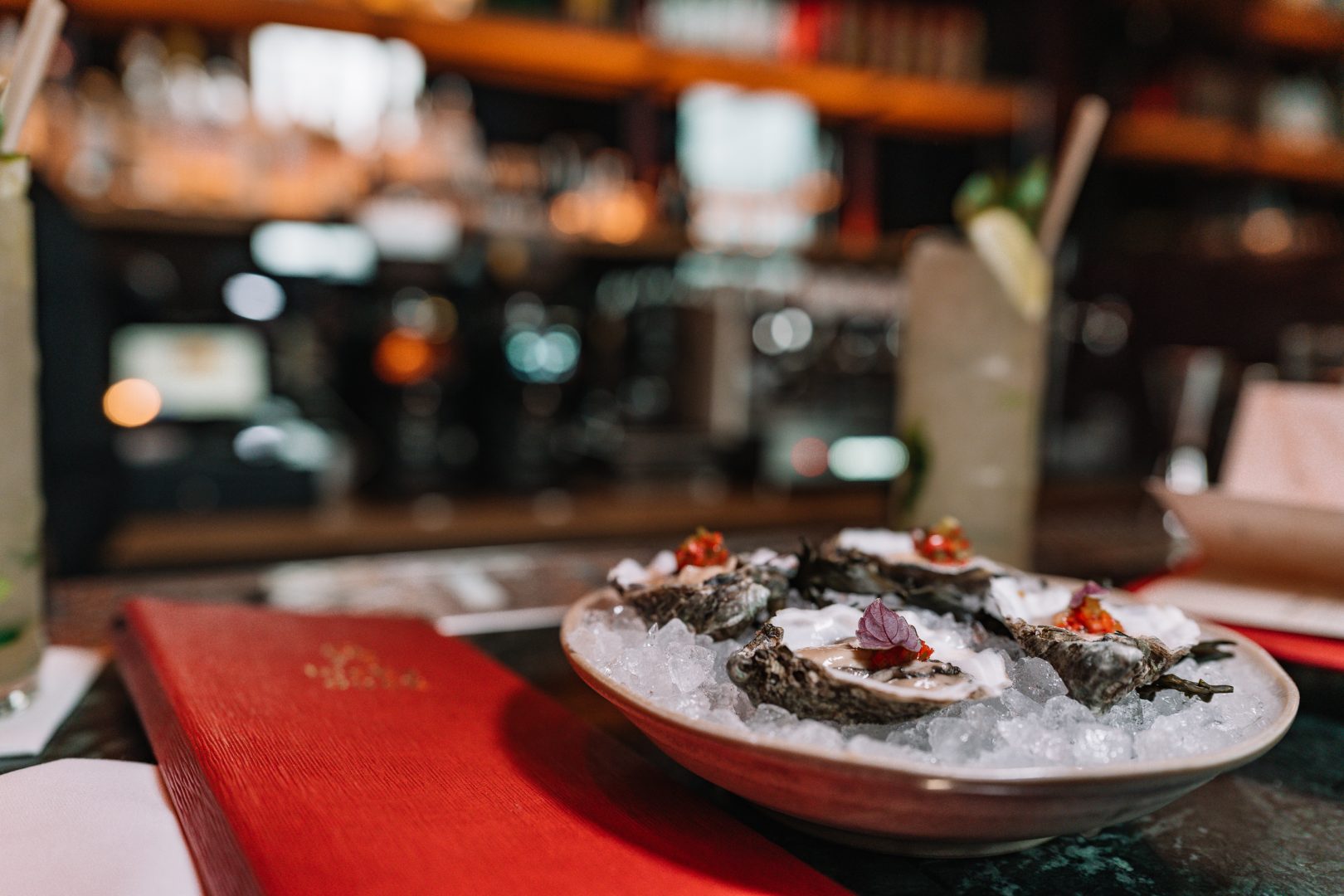
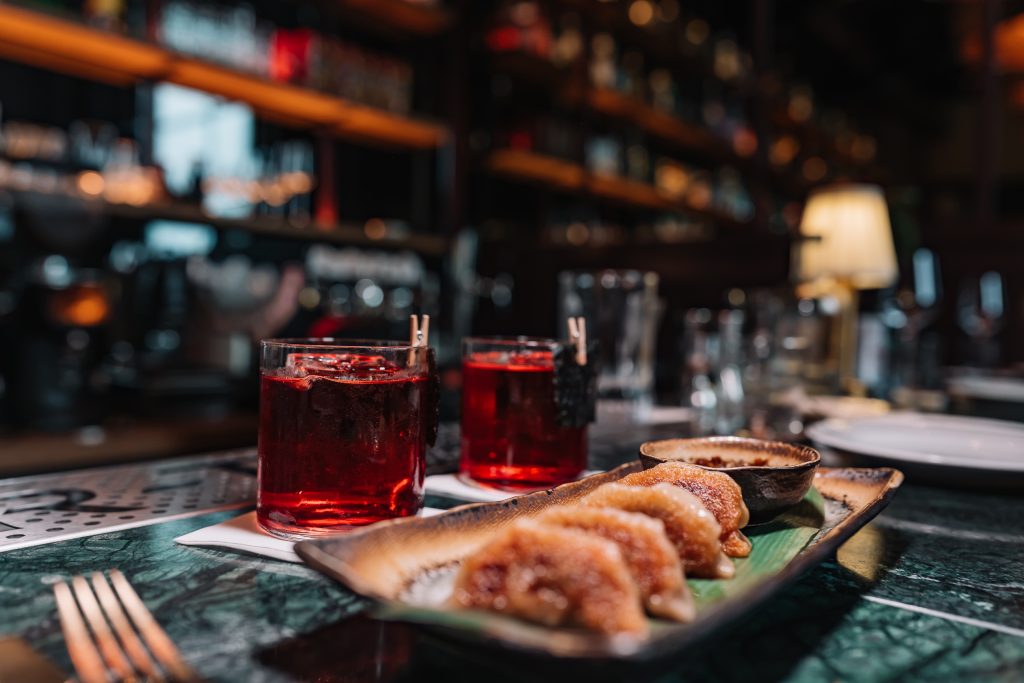
Thai oysters and Crispy Rice Tartare, both carrying birdseye chili, pair naturally with the Tom Yum cooler, echoing the same chili and lime leaf notes on the plate. A black garlic and sesame corn soup is made by hand daily, always served fresh rather than held over. From the raw bar, Wagyu nigiri and a spicy tuna roll round out the sushi side, while popcorn shrimp and garlic shrimp cover the fried and shellfish end of the menu. The mango-forward dishes, including a mango salad with papaya and mango crumble are positioned to run alongside the Tokyo Paloma and the Mango Sticky Rice specifically, extending the pairing logic from the glass onto the plate. Oh, and you can’t leave here without having tried the wagyu gyoza’s, these are insanely good!
Worth the Visit
What stands out at Lucky Duck is not any single drink or dish, but the fact that the two menus were clearly built to speak to each other. The cocktails borrow their reference points directly from the kitchen, and the kitchen’s flavour combinations show up again in the glass. For anyone visiting Amsterdam who wants a meal where the drinks pairing is not an afterthought, Lucky Duck is worth the reservation.