Words: Albert van Beeck Calkoen
Pictures: By Rox Photography
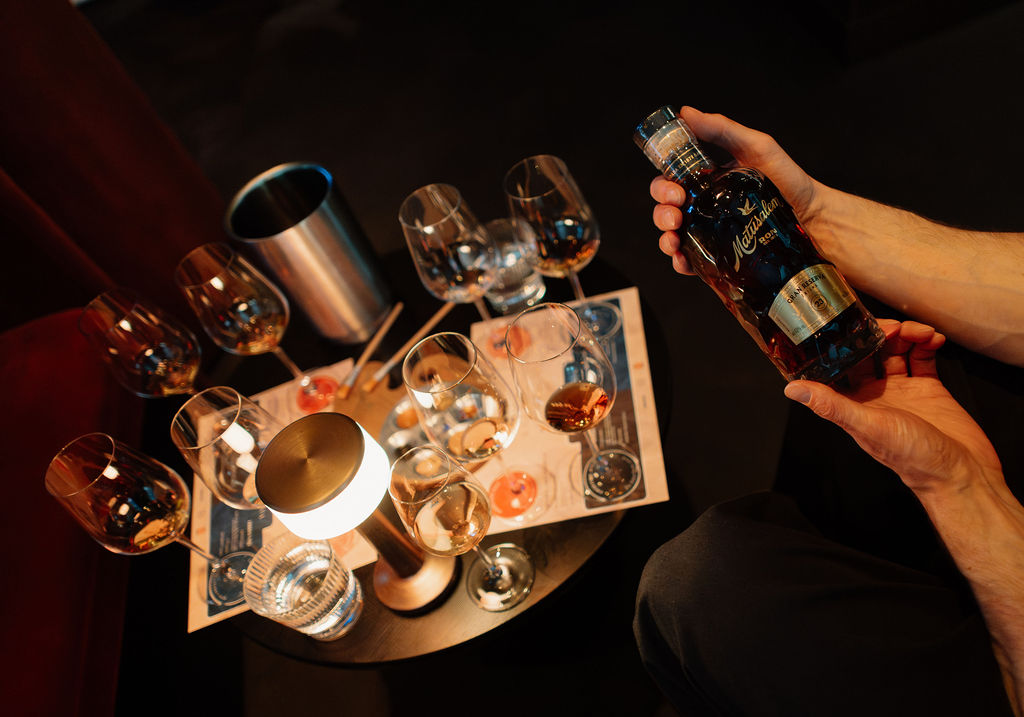
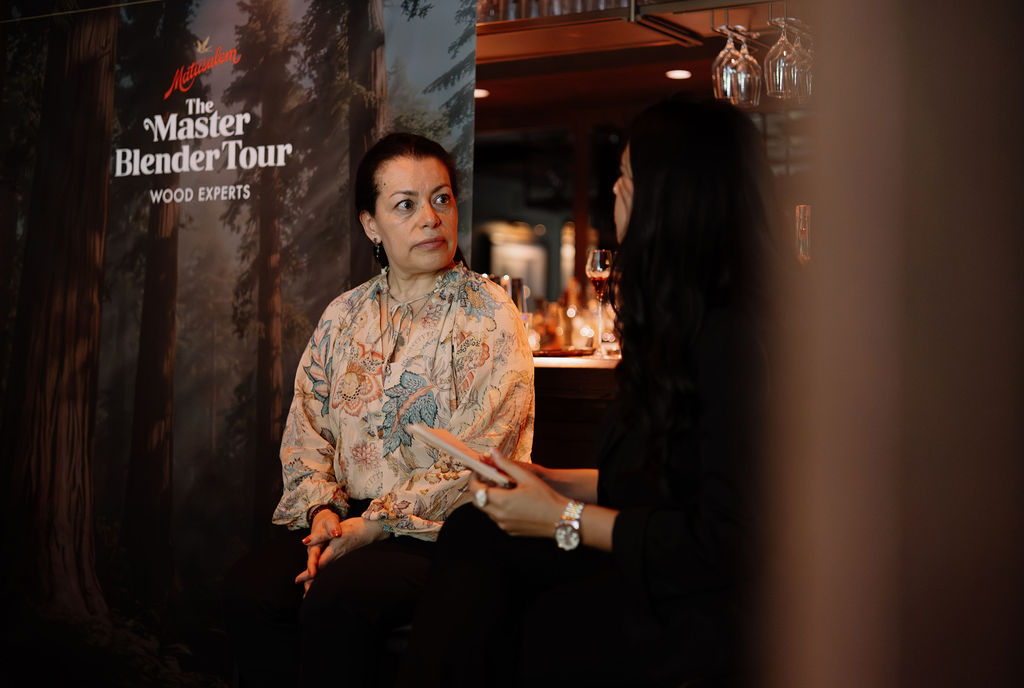
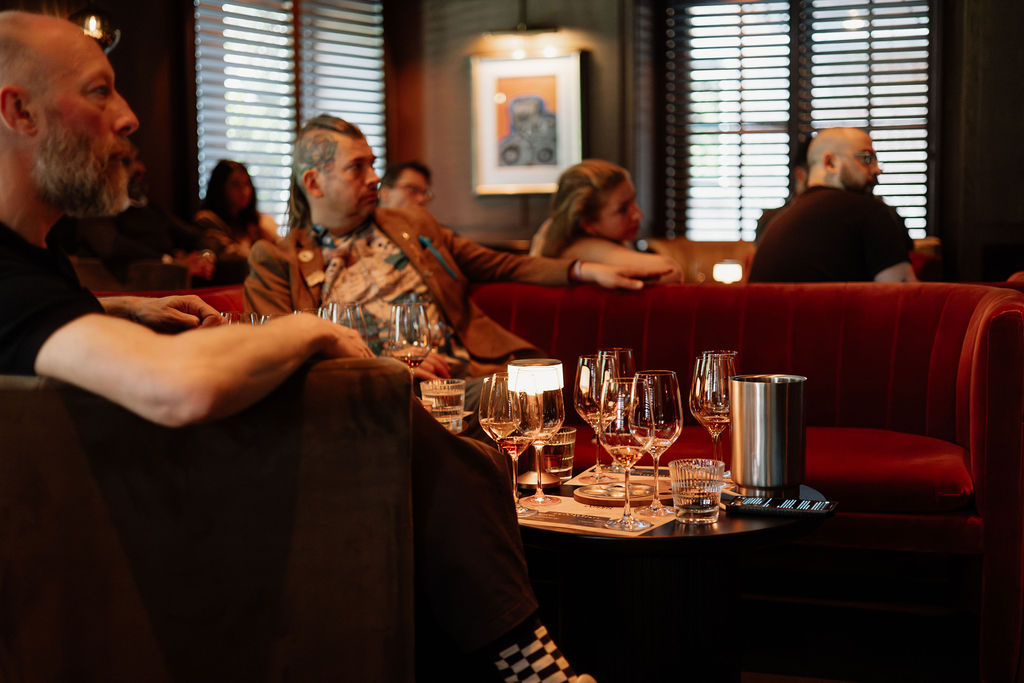
Founded in Santiago de Cuba in 1872, Ron Matusalem built its reputation on elegance rather than intensity, becoming one of the pioneers of the Solera aging system in rum production. After the Cuban Revolution, the Alvarez family rebuilt the brand in the Dominican Republic, where production remains today. More than 150 years after its founding, Matusalem still balances Cuban heritage with a distinctly modern approach to wood management, blending, and aging. At the center of that philosophy stands Cynthia Vargas, the company’s Master Blender. A trained food engineer with studies in oenology and more than two decades in rum production, Vargas has become one of the defining figures behind Matusalem’s modern era. She oversees everything from barrel selection and blending to the development of limited releases such as Insolito, the world’s first rosé rum, and Kiku, a rare sake cask-aged expression. During a recent tasting session and live interview, Vargas spoke extensively about wood, water, climate, blending, and the emotional side of working with barrels that may hold liquid for decades. The conversation moved naturally between technical detail and personal stories, revealing how much patience and intuition sit behind every bottle.
“Every barrel has its own voice”
For Vargas, wood remains the defining element in rum production. Age matters, of course, but she repeatedly returned to the role of oak species, toast levels, warehouse conditions, and time. “We have a catalog of products where the differences are not only about age,” she explained. “The kind of wood we use, the heat treatment of the barrels, the conditions inside the cellar, all of that shapes the profile of the rum.” Matusalem’s identity has long been tied to barrel aging. The brand originally adapted the Solera system from Spanish sherry and brandy traditions, a technique that still influences its production philosophy today. Vargas described the relationship with wood almost as a partnership. “For us, wood has always been part of our history. You need to understand the barrels and you need to understand blending. Those are the two things that define our work.” That attention to detail extends deep into the production process. Before any blend is bottled, samples are taken from selected casks and recreated first on a laboratory scale. The tasting panel compares every trial blend against the house profile before approval is given. “If everything matches the pattern we are looking for, then we proceed,” Vargas said. “If not, we change the barrel selection and rebuild the blend.” Once approved, the rum rests in tanks for what the team calls “the marriage”, allowing the liquid to fully integrate before bottling. Depending on the product, that process can take anywhere from eight days to nearly a month.
Why the Dominican Republic mattered
Although Matusalem was born in Cuba, the company eventually rebuilt its production in the Dominican Republic. According to Vargas, climate played a major role in that decision. “We chose the Dominican Republic because the weather and the microclimates were very similar to Cuba,” she said. “That allowed us to preserve the recipes and the aging style.” Caribbean maturation remains both an advantage and a challenge. Higher temperatures accelerate interaction between spirit and oak, allowing rum to develop deep aromas relatively quickly. At the same time, evaporation losses are dramatic. “We lose around seven to eight percent per year through the angel’s share,” Vargas explained. “That is huge for us.” Climate change has intensified that process even further. Traditional comparisons that once suggested one Caribbean year equaled four years of European aging no longer fully apply. “Now it’s probably closer to three years,” she said. “You can see the changes directly in the barrels.” The tropical environment also creates flavor profiles impossible to replicate elsewhere. Vargas compared aging rum in the Caribbean to aging spirits in Europe, noting that even regions within Europe develop completely different characteristics depending on humidity and temperature.
Water, texture, and protecting decades of work
One of the most surprising parts of the conversation centered on water. “Every bottle is around sixty percent water,” Vargas reminded the audience. “So of course it’s important.” Water is used throughout the entire process, from rinsing barrels to reducing spirit strength before aging and bottling. Poor-quality water can contaminate wood, permanently damaging casks and destroying years of maturation. “If you contaminate the wood, you may lose the barrel completely,” she explained. “And if you ruin a rum, you ruin years of work.” The topic resonated strongly with bartenders in the room, especially when the discussion turned to ice quality in cocktails. Vargas immediately connected bar practice with cellar work. “If the quality of the water is bad, you can damage the cocktail and all the work behind it.” That same sensitivity appears in Matusalem’s experimental projects. One of the most discussed during the tasting was Kiku, a rum aged in rare Japanese sake barrels after initial maturation in French oak. The project took years to realize, partly because the barrels themselves were almost impossible to acquire. “I fought for nearly three years to get them,” Vargas laughed. “They were not for sale.” Eventually the barrels were shipped from Japan to the Dominican Republic, a journey that took almost three months and required careful monitoring to prevent damage. The influence of the sake casks transformed the rum dramatically. “The proteins and peptides from the rice changed the aromas, the flavors, and especially the texture,” she said. “The texture became amazing.” The decision to work with Japanese oak and sake barrels was not simply about flavor experimentation. Vargas described it as a search for another culture that shared similar values around craftsmanship and respect for handmade products.
The birth of Insolito
Innovation has become increasingly important for Matusalem in recent years, particularly through releases like Insolito. Inspired by Provençal rosé wines, the rum is partially aged in Tempranillo wine barrels, giving it a naturally pink hue. “A lot of people think it was designed for women because of the color,” Vargas said during the tasting. “But this is still rum. Forty percent alcohol.” The idea emerged after a client asked the company for something unusual. Deep in the cellar, Vargas rediscovered barrels she had been unsure how to use. “When we saw the liquid again, we knew immediately this had to become the project.” Only small batches are released, sometimes with years between editions because the profile shifts naturally from one release to another. “We treat it almost like wine,” she explained. “Every batch has its own personality.” The rosé influence goes beyond appearance. Vargas pointed toward aromas of berries, toasted bread, vanilla, and wine tannins, while bartenders in the room discussed how well the rum performed in cocktails, particularly in a Paloma.
The emotional side of blending
Despite the technical complexity of her role, Vargas often spoke emotionally about the work itself. During the pandemic, she continued working inside the cellar, convinced it was the safest place to protect both herself and the aging stocks. “The cellar was my safe place,” she said. “Nobody came inside and I was surrounded by alcohol all day.” She joked about sanitizing constantly with products from every major spirits brand imaginable, though underneath the humor sat a clear sense of responsibility. A master blender does not simply create products for the current market, she suggested, but for future generations. That long-term thinking reflects Matusalem itself. Few rum houses carry such a direct link between pre-revolutionary Cuban rum culture and modern premium rum production. The company’s history stretches from Santiago de Cuba to Miami exile and eventually to rebirth in the Dominican Republic under the Alvarez family. For Vargas, every cask contributes to that continuity. “Some barrels are soft and sweet, others are deep and powerful,” she said during another recent interview. “The work of a Master Blender is to listen to them.”
Editor’s note: Ron Matusalem uses a Solera system to age the rums. The numbers on the label are not the indicator for the age of the rum. EU law requires that if an age statement is put on the label, it should indicate the youngest component in that rum. Ron Metusalem does not combine the number (15, 23 etc) with the words Years Old and can therefor not be seen as the indication of the age of the rum. During the Q&A with Cynthia Vargas this topic did not come up but I felt that it is an important topic to add.